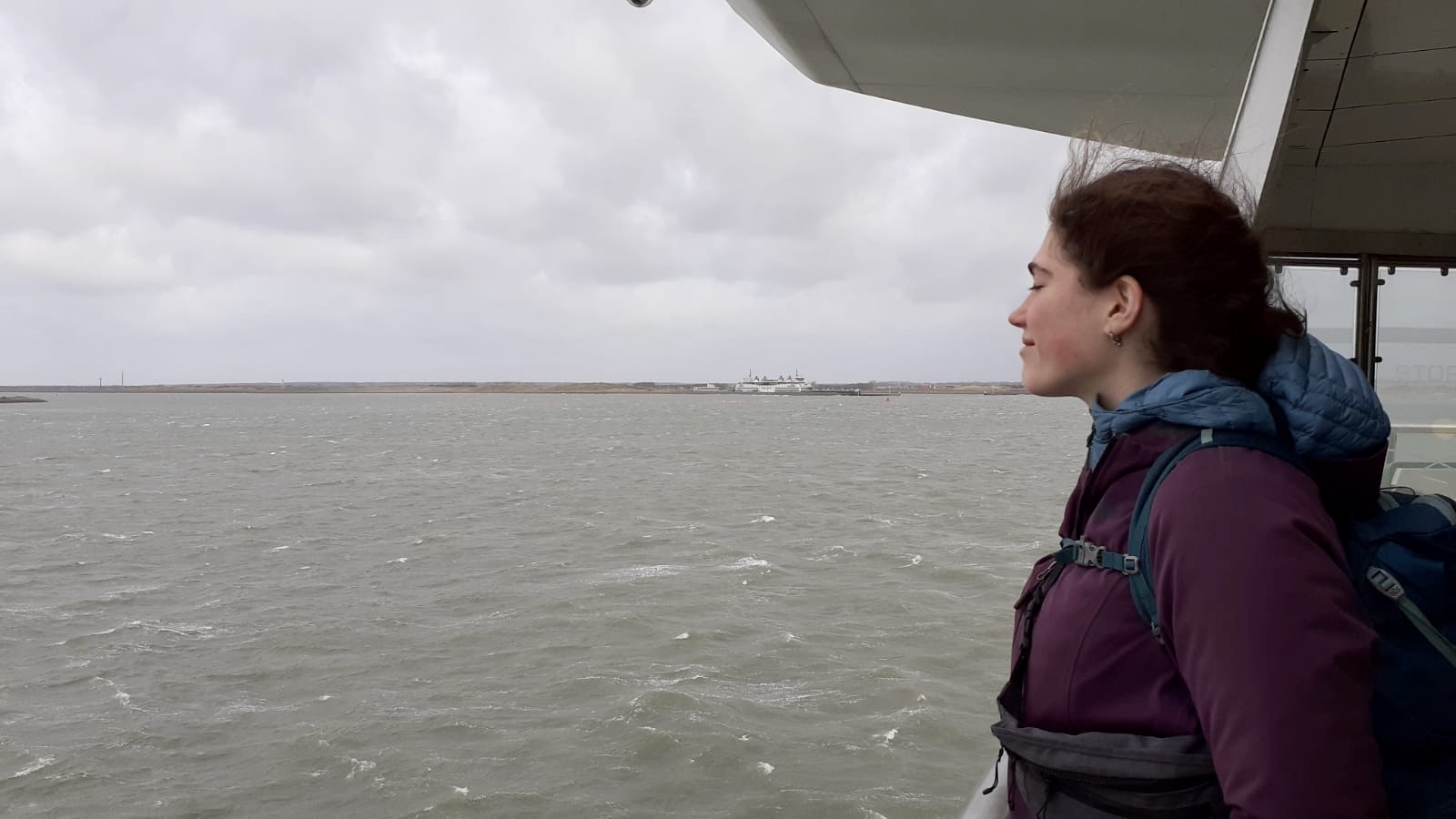

Two weeks ago, about 2000 km (by road) away, I wrote my last blog. Then, in Gangtok in Sikkim Northeast India at an altitude of 1650m in the sunny beginning of the winter season. Now, in Mcleod Ganj (Dharamshala) in Himachal Pradesh Northwest India, at an altitude of 2080 meter, at the beginning of the colder rainy/snowy season. Both of us are exhausted from the impressions of the last weeks, but happy to be at this new destination.
Rumtek
By Eva
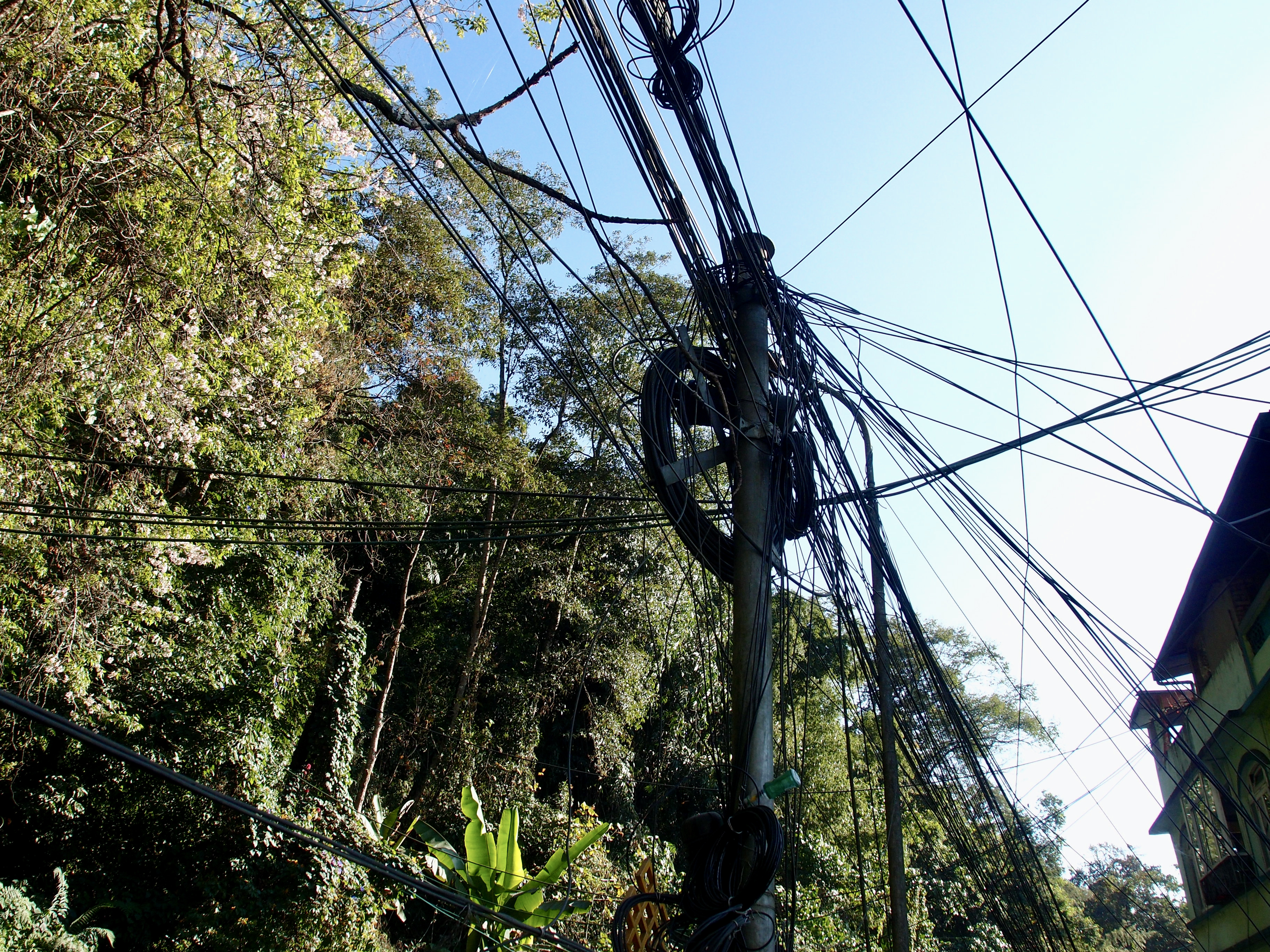
After a warm shower (at least for me, unfortunately when Jelle took his turn after me he found out that I used all the hot water) and a good night’s sleep in a bed, we were picked up by another brother of Lakshman to bring us to our next destination. Again we found ourselves in a car without seatbelts, on bumpy roads, and honking cars, cars overtaking each other at very sketchy turns in the mountains and almost bumping into each other, and motorcycles in between finding their way in the gaps. Crossing by very busy towns, little shops made of carbon and/or corrugated iron, buildings ruined by the floods and being rebuilt, many partly finished buildings with armed concrete (iron bars sticking out of the top/side), and of course in the middle of everything many dogs, chickens, cats, and cows.
Jelle and I decided to play a game: spot the dog, cat, or monkey. Whoever saw the animal first and guessed it right got a point. But unfortunately, from a distant a cat can look like a dog. We saw around 50 dogs on our 5-hour ride, less then 10 cats, and a few monkeys. And then we did not count the cows and goats yet. This reminded me of our host in the last guesthouse we stayed in Sarnath (Dr. Jain). He complained to us about his visit to Europe years ago, and that he found it so quiet on the streets. No dogs. No other animals.
The ride flew by with all the impressions and a quick lunch at Shilling Restro Café in Sirwani, Singdam. And multiple stops by different ATM’s when finally figuring out that just SBI bank did not accept our bank cards, and nothing was wrong with our cards. Let’s say it was a bit stressful, and I literally screamed to Sanjai: “YES we have money.” When we found an ATM that did accept our cards and was not empty for money (because yes that happens too). This yell got me some looks from Indian people passing by.
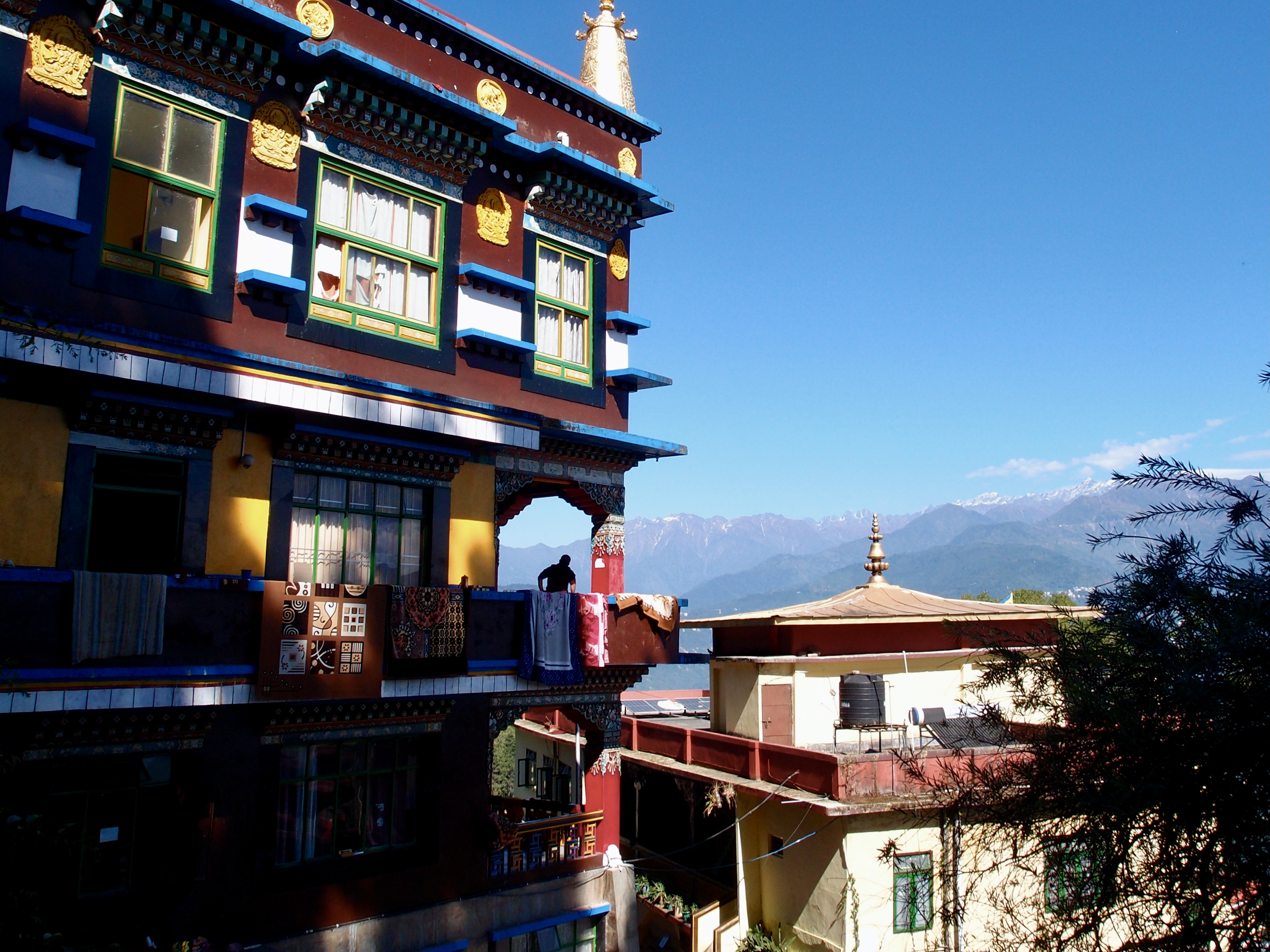
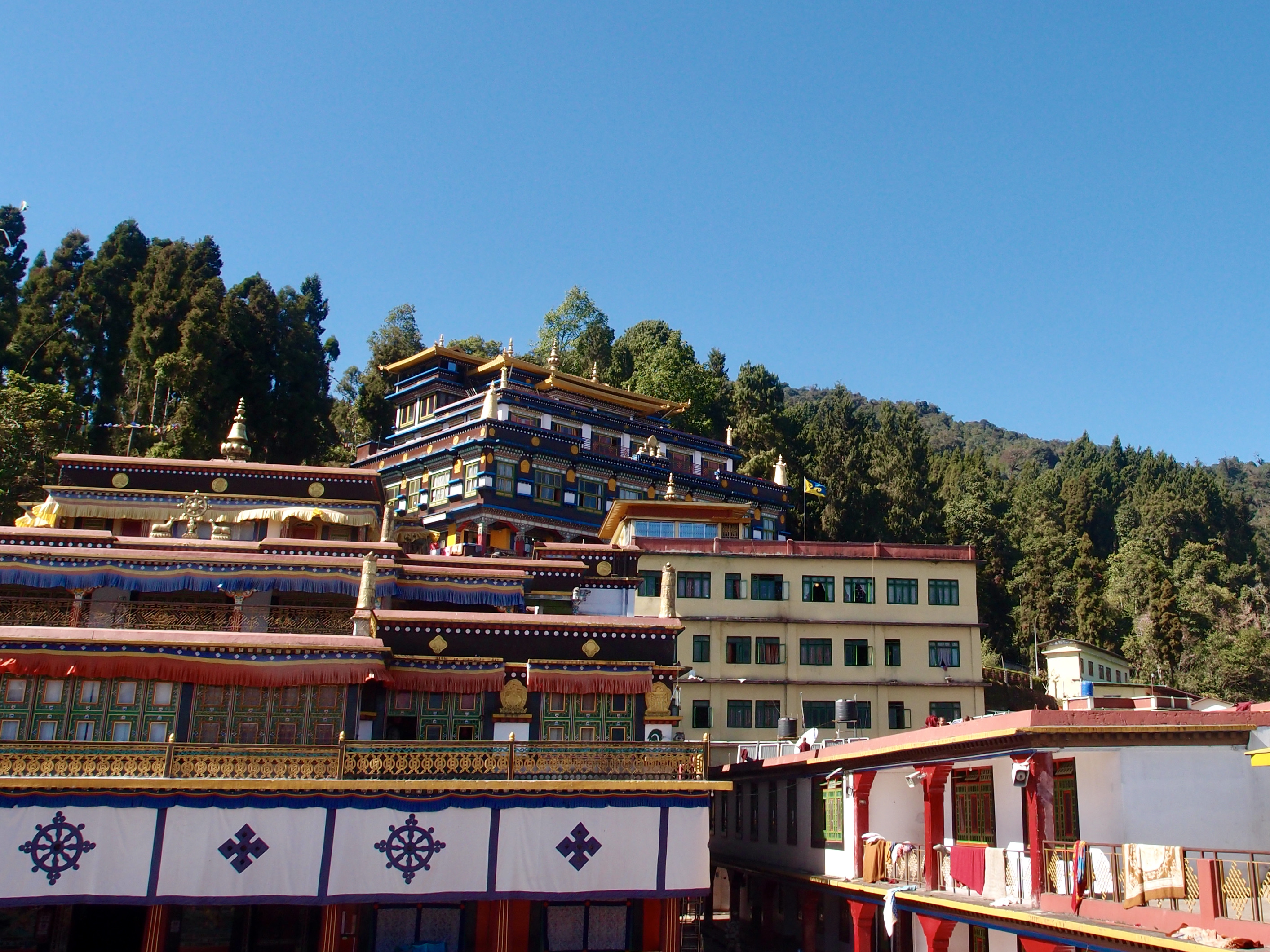
Just around sunset (5PM) we arrived in Rumtek, a little town that is mostly known for the Dharma Chakra Centre or Rumtek Monastery. It is the seat-in-exile of the Gyalwang Karmapa. The monastery was rebuilt in 1959 when found in ruins by the Karmapa after fleeing Tibet.
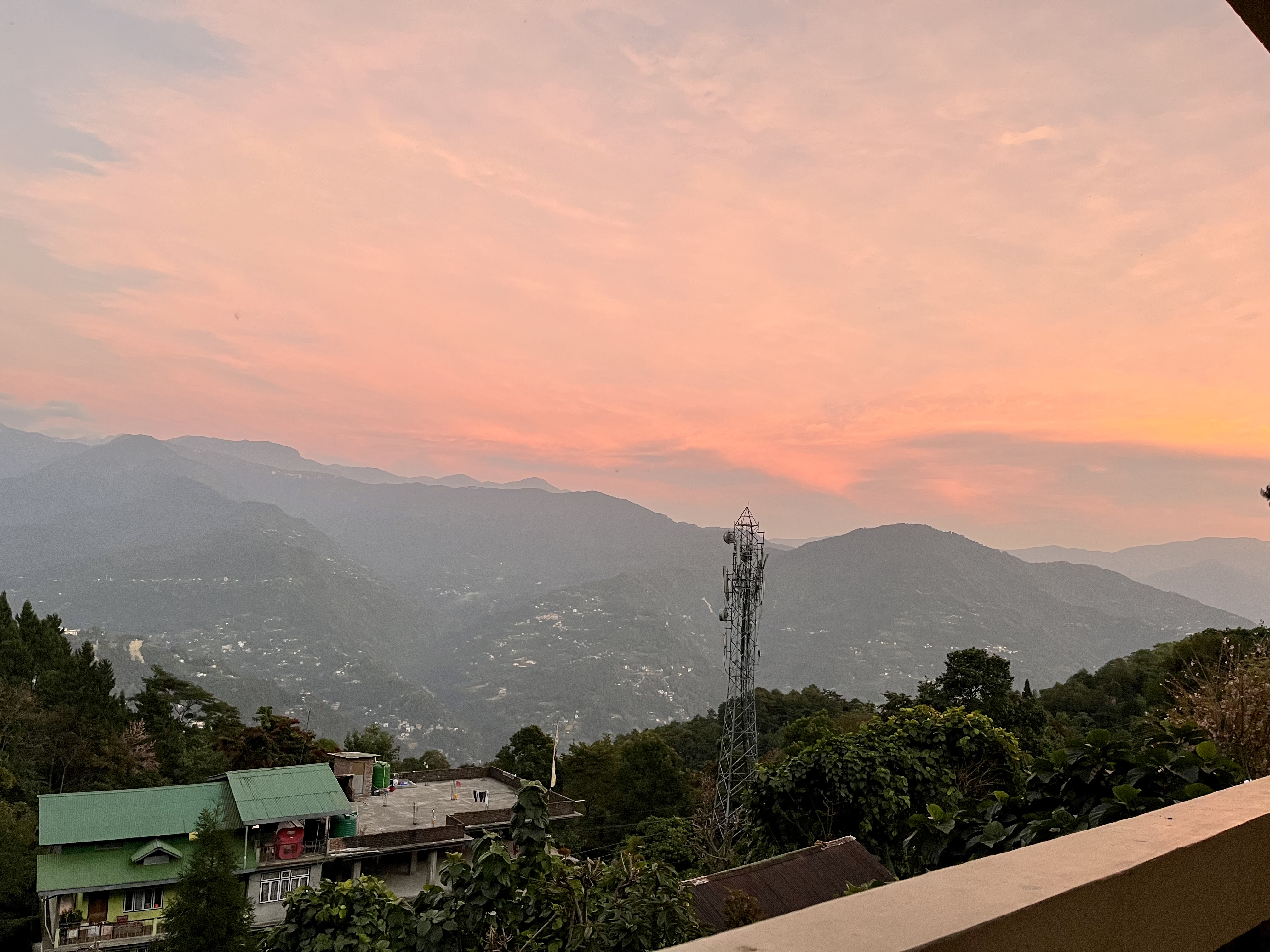
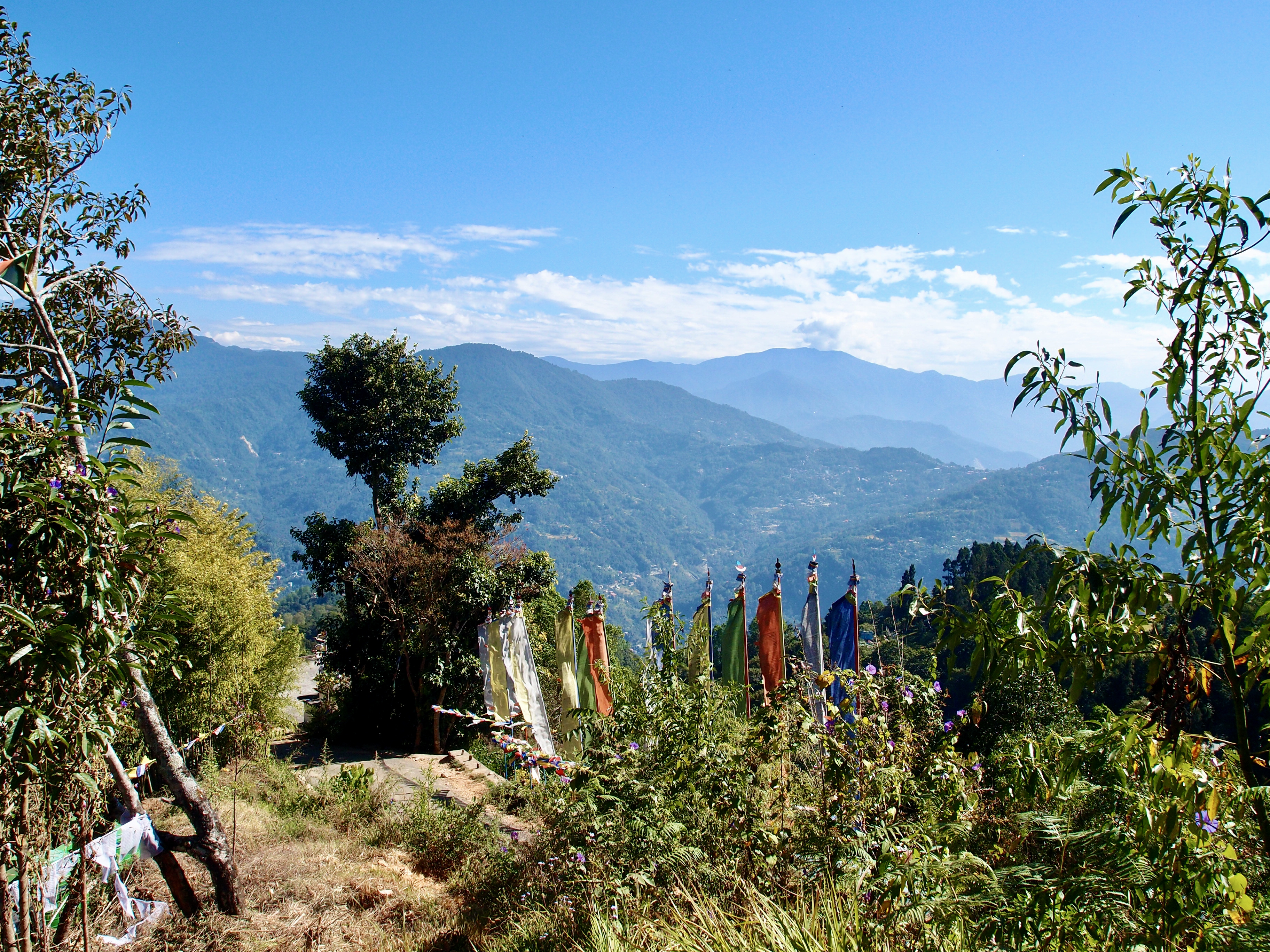
Our guesthouse was on the monastery grounds, so we even had to show our passports and Sikkim permit to get inside. We stayed in Sun-gay guesthouse, a beautiful room with a view over Gangtok (capital of Sikkim) and a mountain-range. Soon enough we learned that we arrived here in off-season and many nice cafeteria promising nice coffee were closed. After not drinking coffee for 2 weeks, I must say I was a bit disappointed. However, we did find a few small local places to have simple diner with Momos and Thali (an Indian platter serving a selection of dishes mostly consisting of Dal (lentil soup), Bhat (rice), and a variety of side dishes (mostly vegetable/potato)). The next day we spent doing laundry by hand, discovering the monastery complex, the old monastery, having small talk with monks, a little bit of meditating in beautiful shrine-halls, and eating. However, it was a beautiful, peaceful place to be (especially because it was off-season), we decided that after being off the grid so much we were both (even me) a bit craving for some city vibes. The next day we took two cabs to get into Gangtok.
Gangtok
By Eva
While Gangtok is a busy Asian city, I must say that it feels like an organized chaos compared to other cities. There are shared cabs everywhere. Different cab points depending on if you want to go out of the city or stay in the center, and you just wait until the cab is full before you go. What for us was not that long during our stay.
Jelle found a hotel in the city center that seemed nice, so we went. We were welcomed by a young gentleman dressed up in a blouse and scarf that told us that he owned the place and the manager was away for marketing purposes. He showed us to our room and we finally had WIFI!
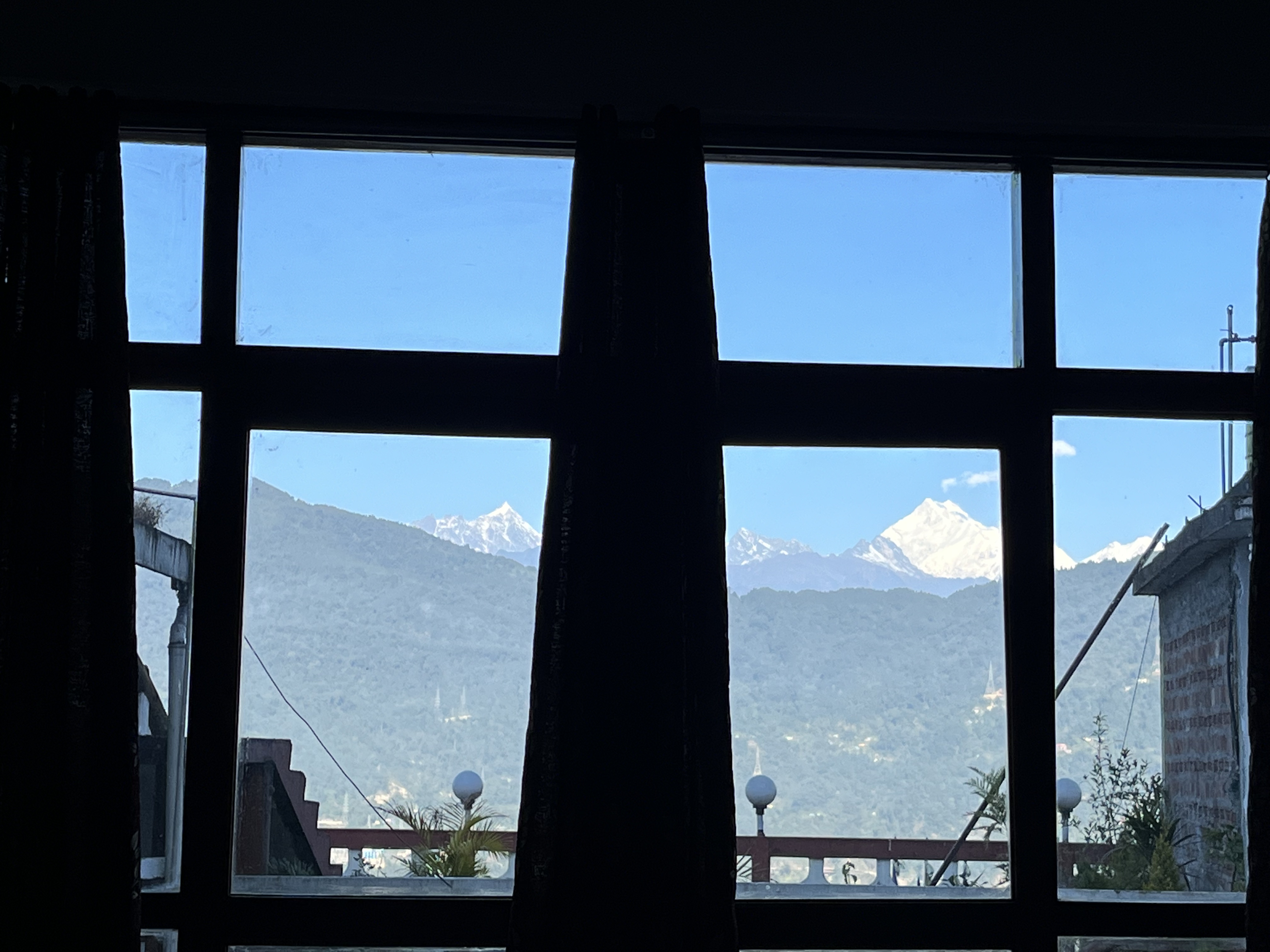
Online in the reviews about the Alpine Crest hotel we already learned that the rooms were kind of dusty. Which was not too bed. Until I went to the bathroom and found that the sink was covered in 1 cm thick layer of brown dirt. I did not have a clue what it was, and when I tried to use the tap, it just fell off. Not an easy way to re-adjust the tap I stamped into the bedroom, telling Jelle that dust was one thing but dirt and a not working tap was one step too far. Hungry and tired I told him he might be the better person to tell something to the staff (the owner and an employer), because I might not be that nice. When Jelle first wanted to finish the game on his phone I decided I would just go myself anyway. Let’s say I was very proud of myself because I stayed nice, and told them in nice words(?) that I was not very happy. There were no other witnesses though… Anyway, they listened and told us that they were going to fix it, and then disappeared. At this moment we learned that in India people do not explain what they do, or what the plan is. They just do and leave us in the dark. After an hour waiting, (and we were still hungry for lunch and wanted to go out, so it might not have been an hour), we decided to just let them know we would go out. We found them on the roof. They told us they were very sorry and gave us an upgrade to a suite (a somewhat bigger room with a view over the Kachengjunga mountain range). We did not complain. We moved our stuff and went out to get lunch.
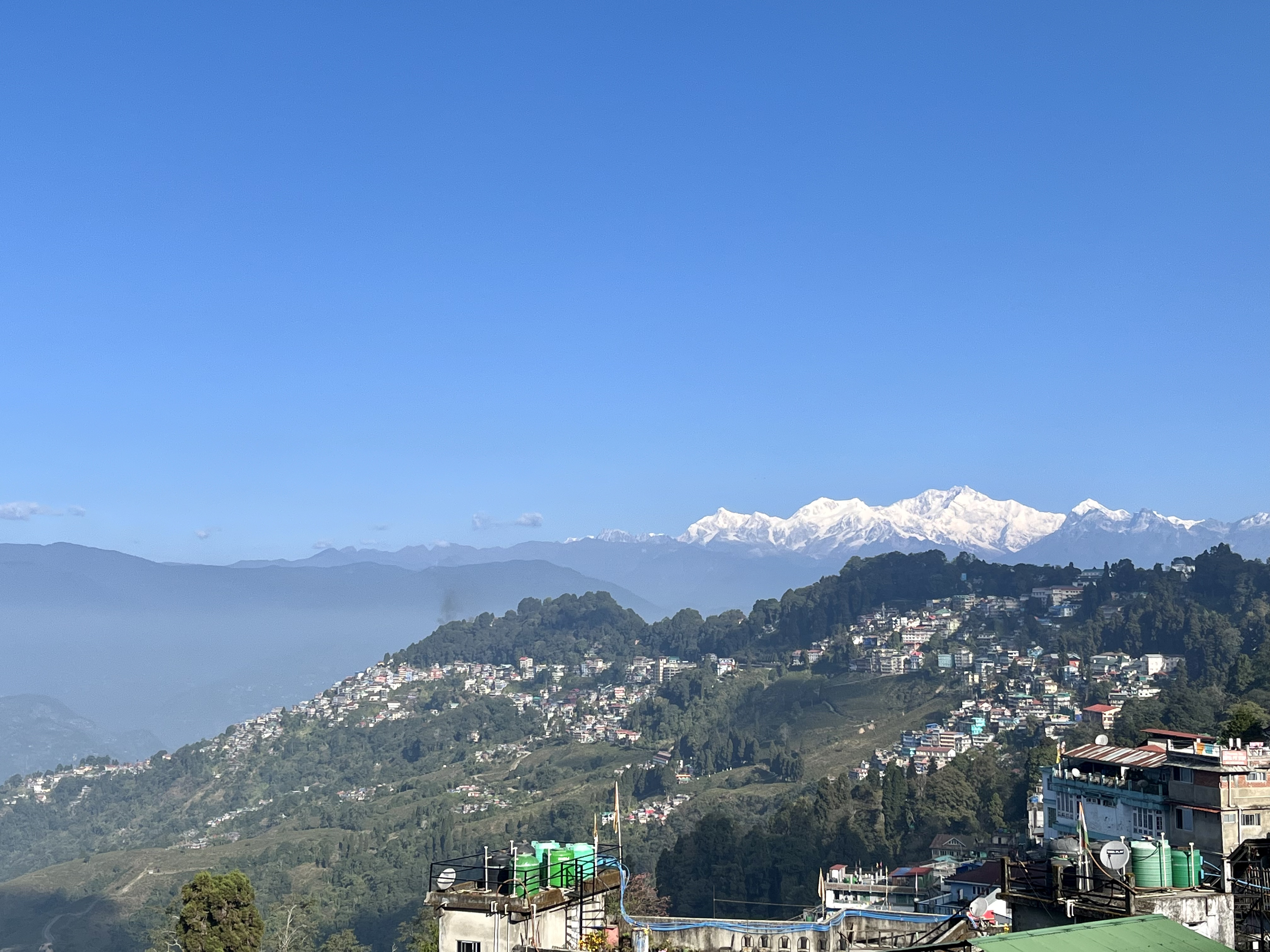
And yes, the Kachenjunga (the third highest mountain of the world, and Sikkim’s pride) that we just saw up close a few days before at the trek, was still visible at the other side of Sikkim.
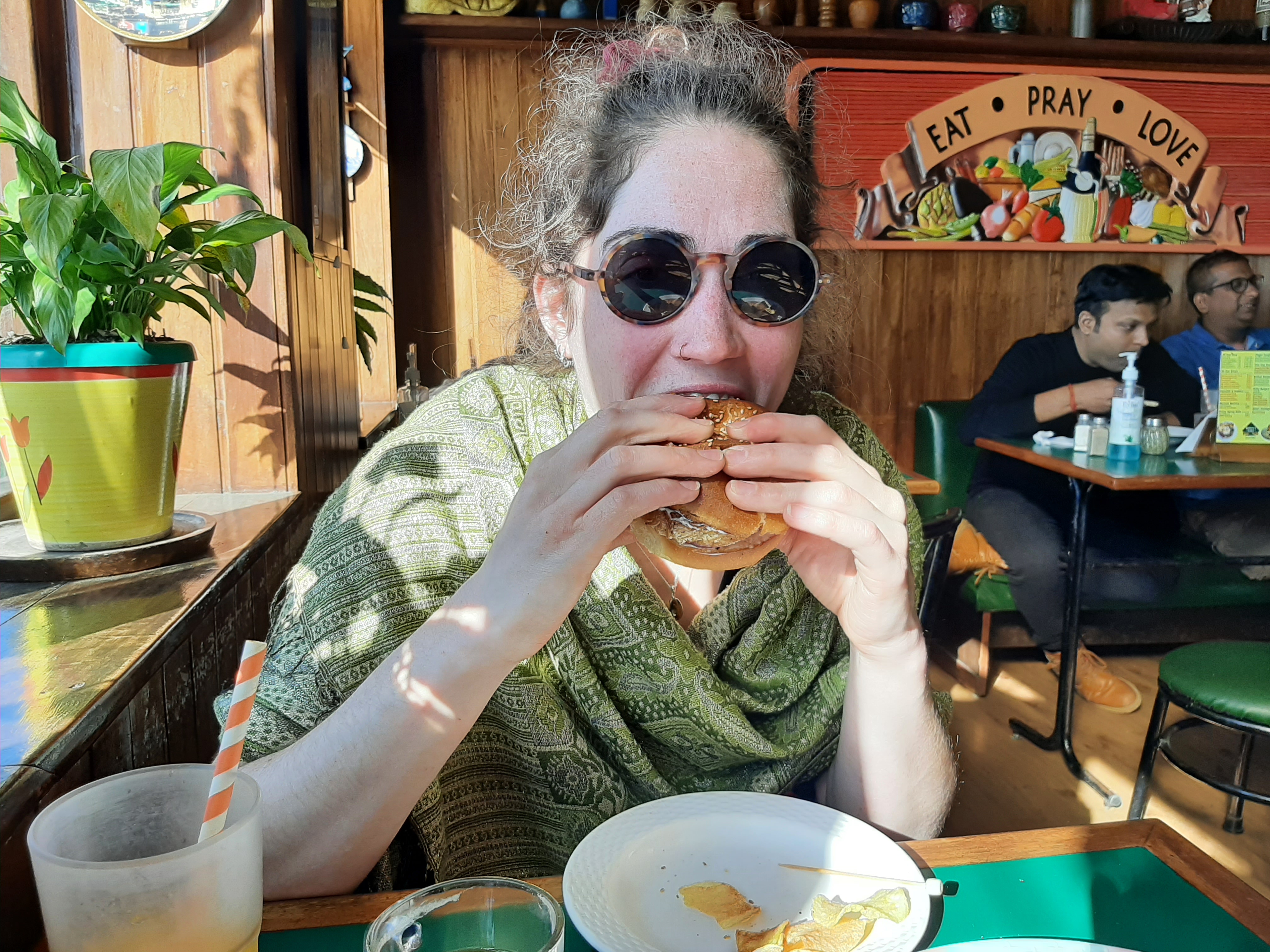
Just when I received a message from my Japanese friend Rino, “How is eat, pray, love in India?” We arrived at the Baker’s Cafe with an eat, pray, love sign. I must say that Jelle and I were a bit tired of all the thali. Therefore, we were very excited that we could order vegan burgers (and decent coffee!!). There was even normal bread, and muffins. After this lovely and exciting western lunch, we decided to go to the Tibetan institute. During the hike down to the main road, through a busy shop-street that almost had a Western appeal to it, we ended up in a discussion. The funny thing was that we were standing still and a Buddhist monk stopped next to us and started to watch us. “Namaste, What’s up?”, I asked. He asked us if we were married because we certainly looked like it. Then after that he kept asking us why we weren’t married. When we laughed and said that we would like to finish our conversation he asked for food. Because this lovely monk made us feel a bit uncomfortable and we just had lunch, we decided not to. Later I explained to Jelle that begging (for food) is part of the Buddhist practice, contributing to humility. Better called “accepting alms”.
Down at the main road I refused to pay 200 rupees (2 euro) for a taxi, because I thought it was too expensive for a 10 minute ride (O my principles..). So we walked all the way to the Namgyal Institute of Tibetology. “The initial purpose of the Institute’s foundation was to preserve the invaluable texts on history, religion, literature and science brought from Tibet at the time of the region’s political turmoil in the 1950’s.” It was very insightful and gave us some more insight and information about drawings we saw in the Rumtek monastery a day ago. Upstairs was a beautiful library with hundred old Sanskrit texts. Descriptions told us some texts were almost 2000 years old. Jelle was very sceptic about this statement, because we do not have texts in Europe that are that old.
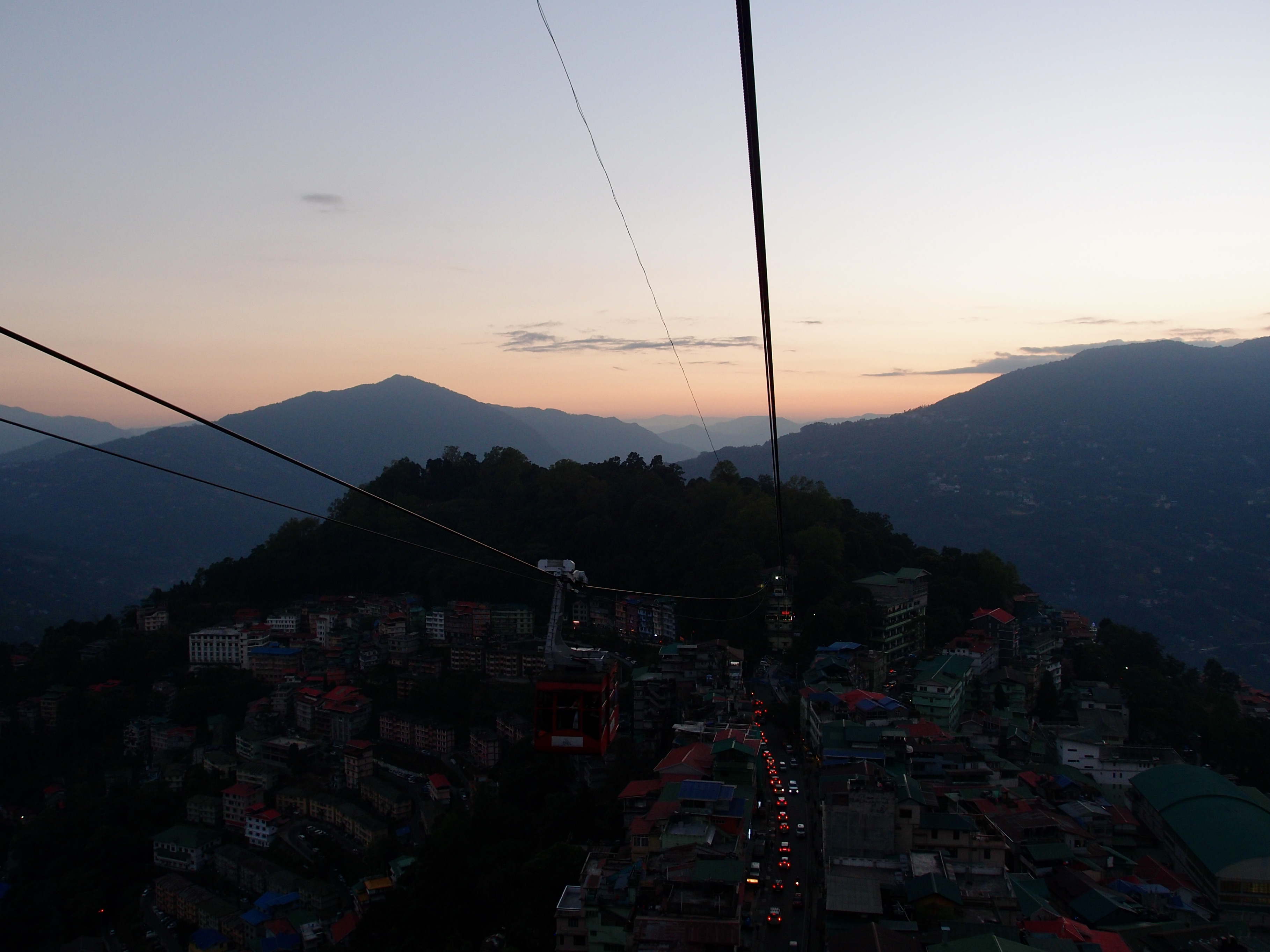
After this we decided to take a cable car back up into downtown (which was twice the price of the taxi I refused earlier… Ooh my principles), but unfortunately, we misunderstood. Because this cable-car was only a tourist trap, so you could not leave the car at the top and had to go back down. Oh well, Karma? So then we walked all the way up to downtown (40 minutes). That night we had a very overpriced dinner, because we read there was live music that evening. We had some diner at the terrace and went inside to listen to the live music afterwards. Suddenly we were surrounded by all girls and a few guys who were jumping and singing along with the Sikkim band Lasomungkup. The funny thing was that after every song, everyone was sitting down, and they just stood up again as soon as the next song started. Luckily everyone is so much smaller than we are that even when they were jumping in front of us, we could still see the band. We danced along with the local crowd. Jelle was so impressed by their skills that he wanted to tell every member of the band after their performance how great they were. So he did. After the performance we stayed a bit longer to finish our HIT beer, and danced with 10 people who managed to get access of the giant JBL box that was standing in the bar, and had put on some hindi music. After a few songs we got tired of it.
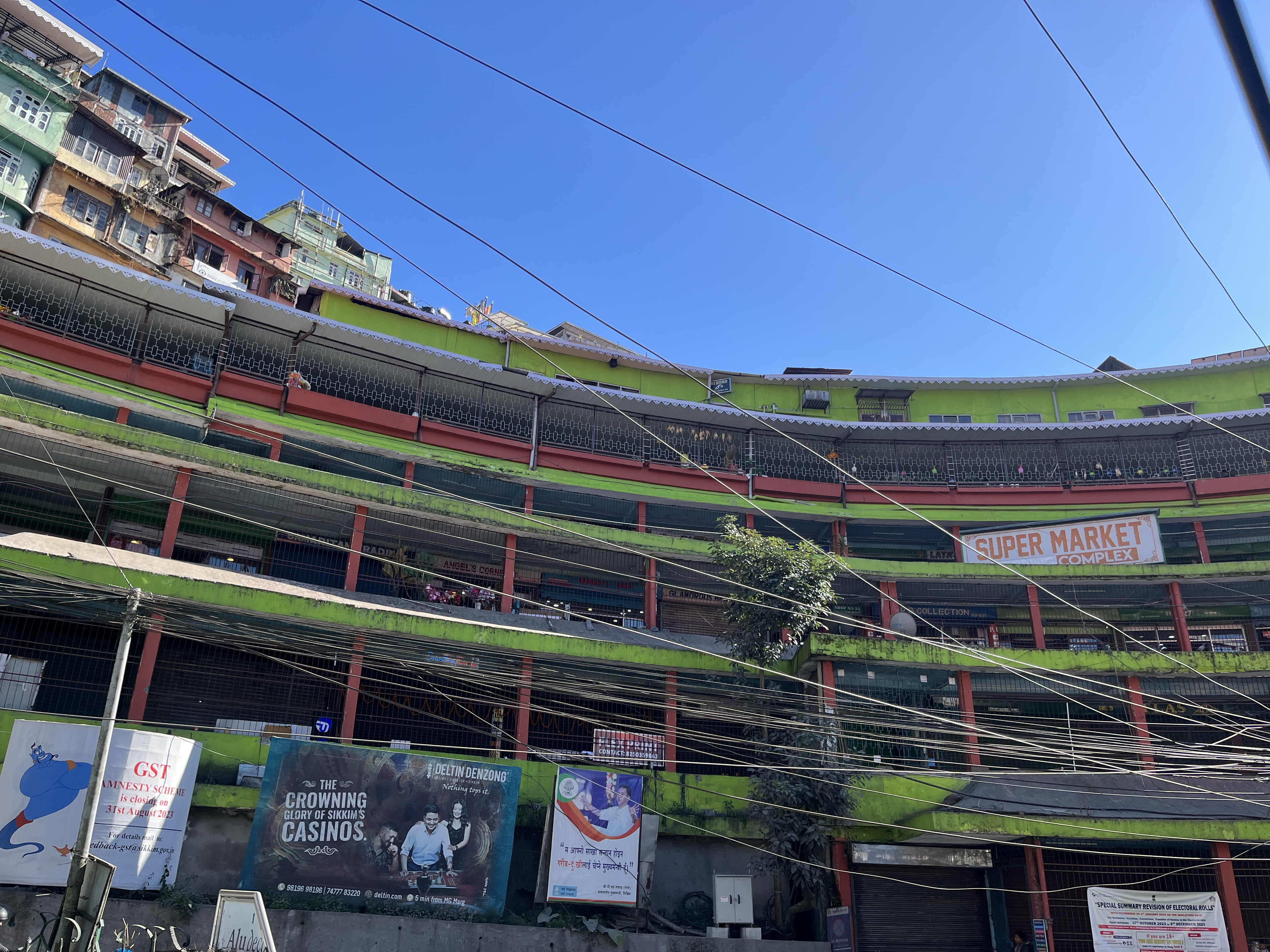
The next day we went to a local bookstore: Rachna bookstore. I bought a book with short stories of a Nepali writer “Long night of Storm”, and Jelle bought a fiction story about the Ghorka revolution. We stayed a bit longer to have a little chitchat with the owner, and I had a delicious Americano (with roasted beans from Darjeeling). Afterwards we walked around the city to gather some lunch to eat at the roof terrace next to our suite. We ended up in a local market in what looked like a parking lot, but was filled with stands and a bustling crowd.
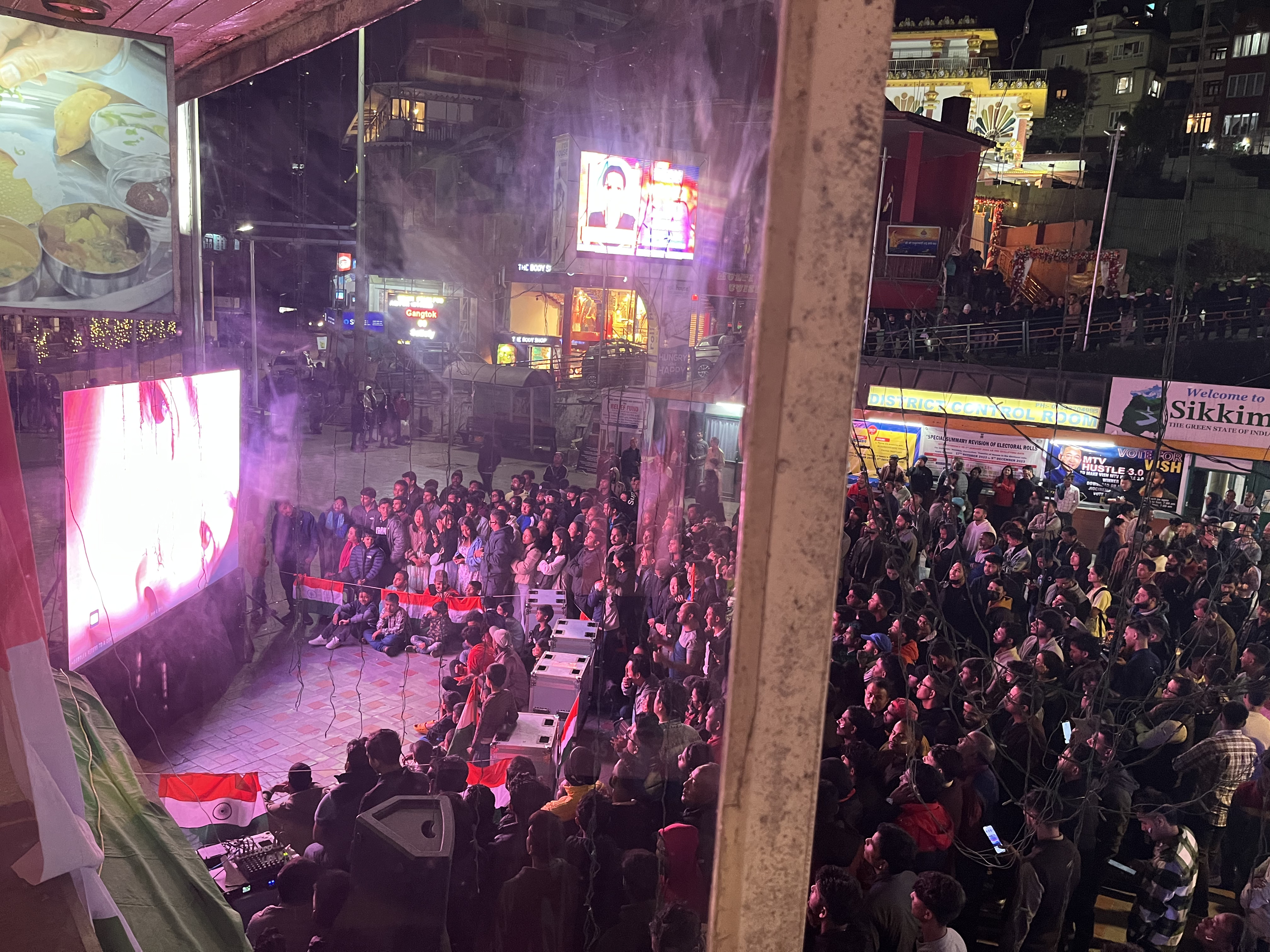
That evening the cricket world-cup was happening: India against Australia. On the main street the match was screened on a giant screen with an enthusiastic sound. Unfortunately, every 5 minutes the match was disrupted by some commercial spot, but ‘luckily’ they decided to mute these commercials and pump some loud hindi sing-a-long songs instead. We decided to have dinner at the restaurant right above the crowd and learnt about cricket rules via a google search during dinner. About half way through dinner we started to understand the game a bit, and I was hanging out of the window to watch the game every time the crowd screamed. It was fun. Australia won, but we had a lovely evening enjoying our last HIT beer, because we were about to leave Sikkim the next day (HIT beer is only sold in Sikkim).
The next morning, we had breakfast at the Rachna bookstore and took a shared taxi afterwards to a spot to get a shared jeep to Darjeeling. Again, we were not explained anything, our bags were attached to the roof of the car, and we were just put in the third row of the jeep. I think we waited for about an hour not understanding why we were waiting. But around 1pm we finally left Gangtok. And of course nobody explains anything, because we are in India.
It was a terrible ride. We shared the third row of the jeep with 2 other people, and our legs did not have a lot of space. After 3 or 4 hours we suddenly had a break. Not sure if this break was for us or the driver, because he had his whole jeep washed while we, and the other 8 passengers just had momos and waited until we could continue our journey.
Darjeeling
By Eva
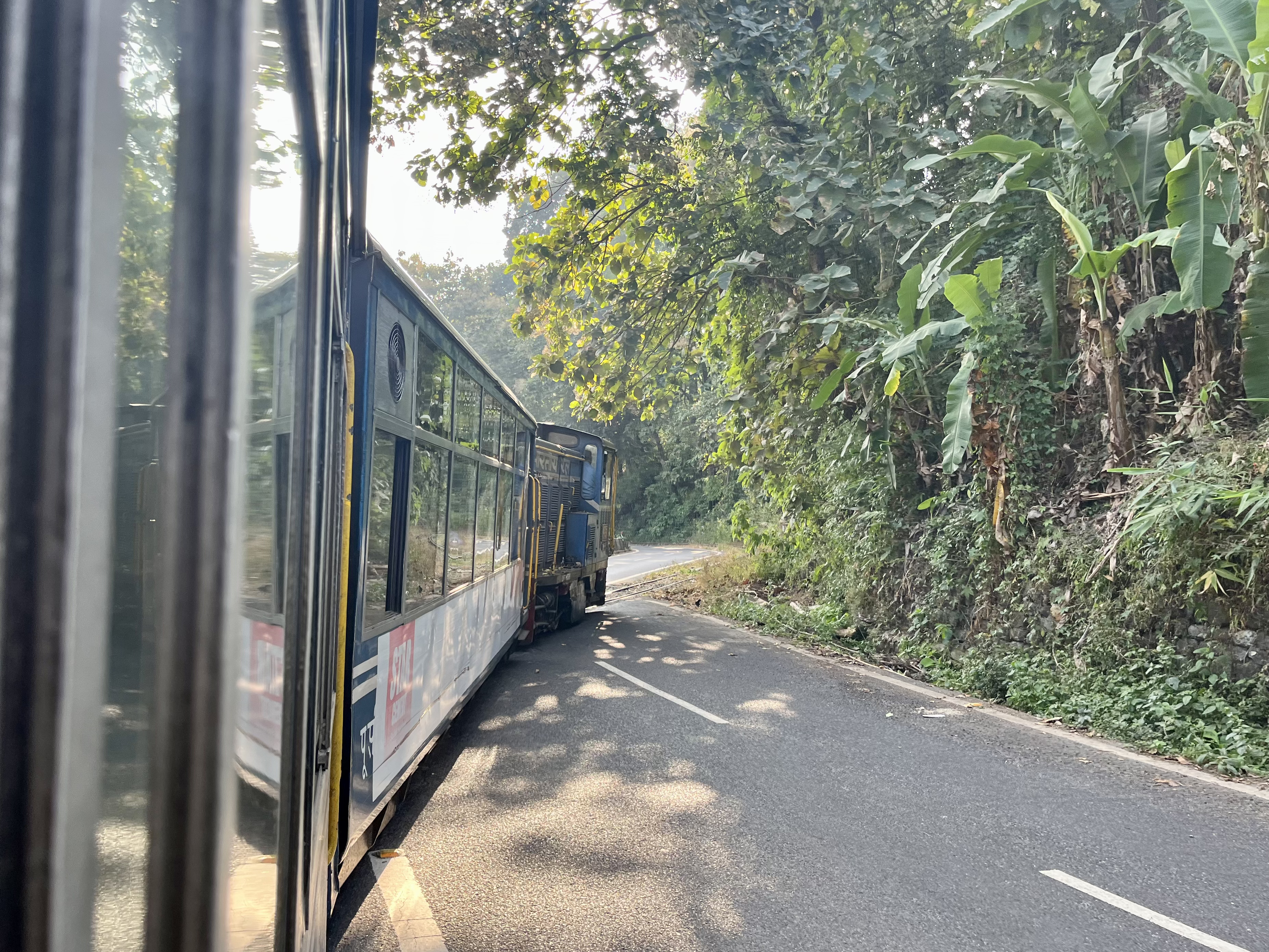
We arrived in Darjeeling when it was already dark. The jeep drove into the small streets filled with people, motorcycles, a train track following the roads like a Dutch “tram” (also known as the “toy-train” a very old train steam and dieseltrain now mostly used by tourists), and of course dogs. Both sides of the road were full of little shops selling food, some selling milk, or even meat (with giant humps of meat hanging in the open air). Then the street got broader and suddenly on the right side of the streets more than 5 giant mountains of clothes were stalled on the streets, surrounded by screaming people trying to buy or sell clothes. Suddenly we arrived and had to get out of the jeep.
We decided to stay in a hostel for once, because we thought it would be nice to stay in a place where we potentially could meet people. The Hide-out hostel was definitely a hide-out, because it was very difficult to find. To get there we had to walk through a “Kalverstraat”-busy street up a hill and I was hungry and tired. Then we walked around for 20 minutes, without having a clue where the hostel was, and nobody could help us out. We called the owner who could give us a better description. We basically had to walk through the back garden of a house to finally see a sign of the hostel. Only dorm rooms were available (5 beds). It was a small room with almost not enough room to move around. I was not very pleased but too tired to decide to move to another place. Furthermore, in India it is normal to just have the shower in the middle of the bathroom with the shower-drain at another random place in the bathroom. So, with wet socks and an empty stomach we went out to get dinner. To avoid the crowds, we walked all the way back down for dinner, but by the time we got there almost everything was closed. And we had the Indian style of fastfood: thali served in a paper take-away box.
After a turbulent night of sleep during which the door was slammed into my feet around midnight by accident, and I woke up from an Indian roommate that was waking up for the sunrise, I decided that I was too old for this type of hotel, and for 200 rupees more we could stay in a private room in a hotel. Jelle agreed. We moved to the Tranquility hotel with a lovely common room with library and a rooftop terrace.
Darjeeling is a city in West-Bengal and a major tourist city for Indian people. In the evening the city comes alive with street markets everywhere selling scarves, Indian/Tibetan handicrafts, Momos and other “local” street foods. It is difficult to find Indian food or even nice pants, because Indian tourists want to eat something else, and want to buy clothes that they cannot buy at home. So everywhere you can find momos and Chinese food like chowmein. Furthermore, somehow everywhere were little bakeries with a variation of different cakes. Like Sid’s café where we had lunch one day, and Jelle had a brownie as dessert.
After a somewhat peaceful day, booking a train ticket at the Darjeeling station for our further trip, walking around the city, and finding a climbing rock where we made an appointment with Japan to come climbing in two days, we had dinner in a lovely Tibetan restaurant (Noryang Tibetan Kitchen) where we could literally see the lovely host prepare the momos fresh in front of us. Disclaimer: the booking of the train tickets was NOT peaceful. It turns out that in festival season (November) people book their train tickets a few months ahead, so it was difficult to find the tickets that we needed.
The next day we went mountainbiking with a local guide. Our guide from Adventures unlimited told us a lot about Darjeeling and the local water filter system during our trip. He told us the famous Darjeeling tea is not actually local. The seeds for the tea were stolen from China by the English in the colonial times. Also, he told us Darjeeling is a very multi-cultural city where Christians, Muslims, Hindus, and Buddhists live happily together. We biked on an old military road through the (can’t find the name, sorry) park. Well actually, we mostly walked our way uphill, because it was such a bumpy, steep road, that it was very difficult to keep enough speed. On top of the devil’s climb I was very happy to see a pink bench. So I said: “I love pink”, and with a deep sigh I sat down. Just when Jelle wanted to sit next to me I felt my hand being wet. Then I took a look at my hand and suddenly it was a very pink hand. ‘SHIT, wet paint!” I immediately was back on my feet and Jelle pulled my daypack off the bench. The bottom part was now pink… Obviously stressed about the backpack we suddenly were with the three of us with tissues surrounding a backpack and cleaning it. Luckily our effort paid off, and luckily besides my hand I was pink-free as well.
The way down was a fun and bumpy ride, through the jungle and ending in a lovely little restaurant where we had some momos, and they showed us their interesting way of folding these delicious snacks.
We were exhausted when we were back in the city, and craving a beer. However, it turned out most restaurants don’t sell beers, only ‘bars’ sell beer. Therefore, we were “forced” to eat in “Glenary’s – Bakery, Restaurant & Pub”, an overpriced restaurant in an old colonial building. Here we did order Indian beer (kingfisher) and Indian food. Because after our Gangtok adventure we were already craving the Indian kitchen again.
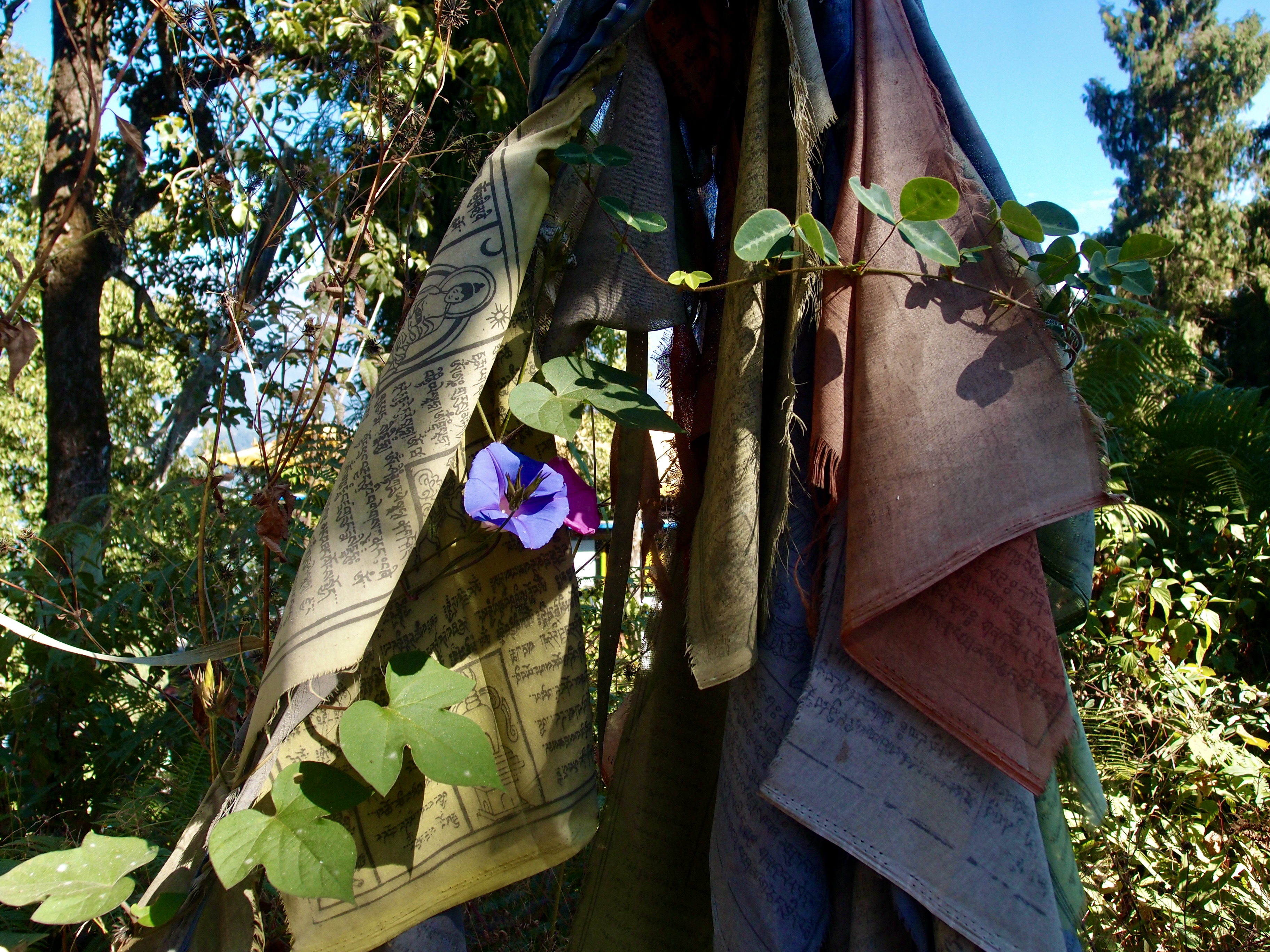
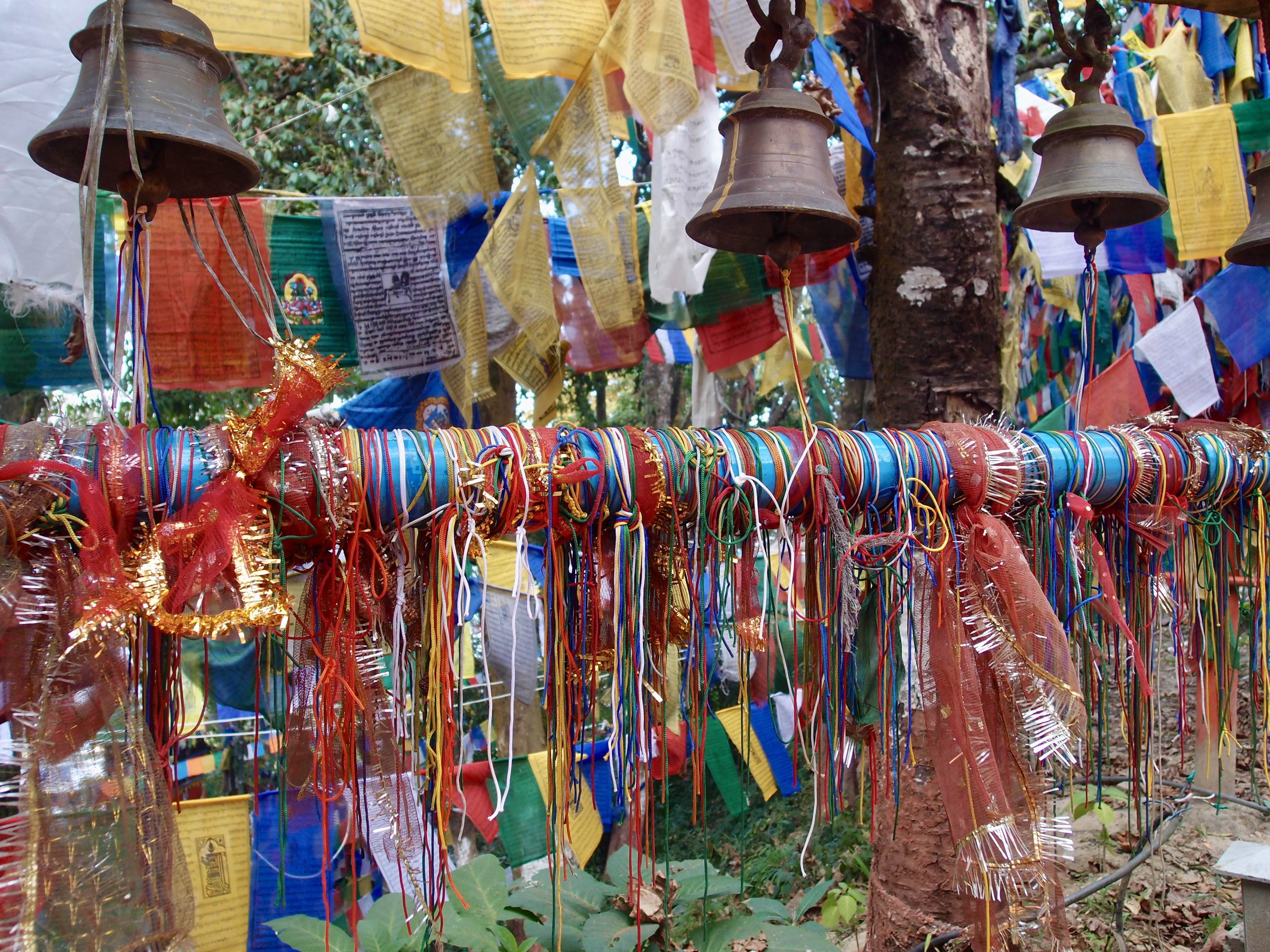
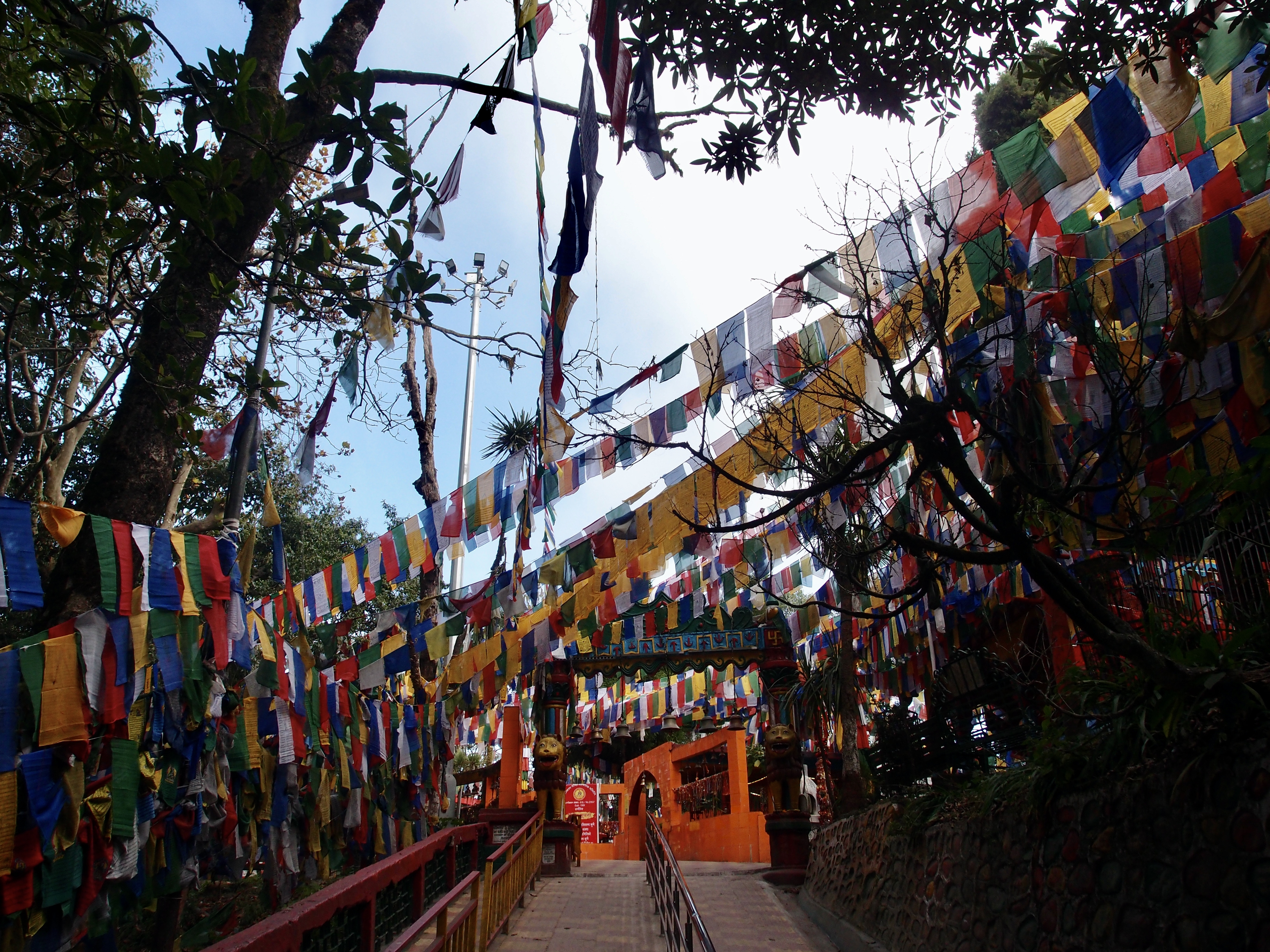
Our last day in Darjeeling we were both craving for a rest day, but knowing that the next two days we would spend in the train we decided to get over ourselves and walk all the way to the climbing rock. On our way there we visited the Mahakal temple. This temple is shared by the Buddhists and Hindus and wow wat a magical place. I got blessed 3 times (which means someone is chanting a prayer for you and you get paint on your forehead), Jelle refused. This temple is a combination of Buddhist stupas, Hindu little shrines all dedicated to a different god, Hindu bells, Buddhist prayer flags, Buddhist prayer wheels, Hindu colorful bracelets. In the main temple at one side a Buddhist monk was blessing people and chanting prayers, opposite to him a Hindu Shadhu was blessing people. People were praying, walking, ringing bells, and blessing each other. It was vibrant. This was what our mountain bike guide meant when he told us that all religions were living in Darjeeling together.
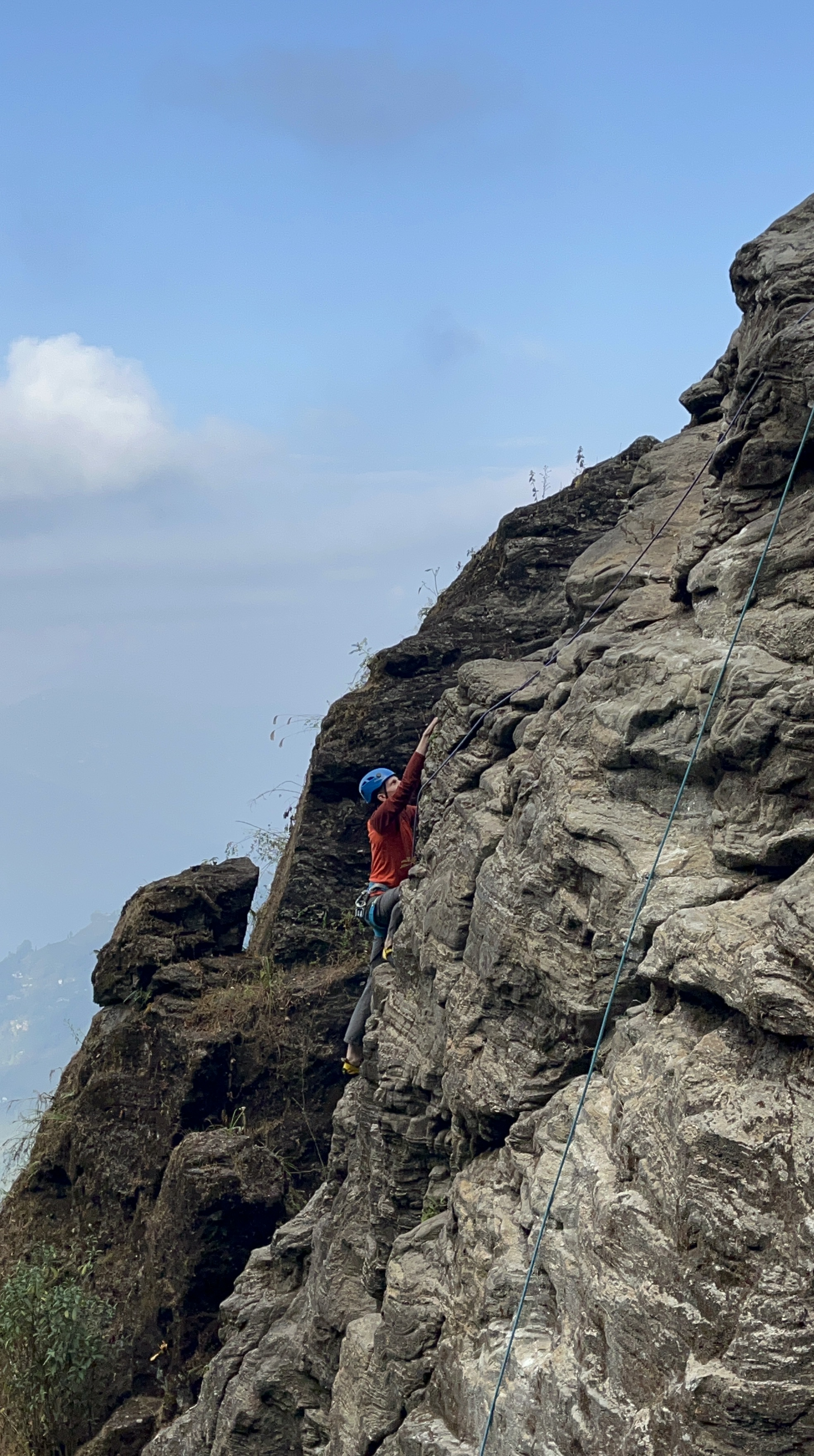
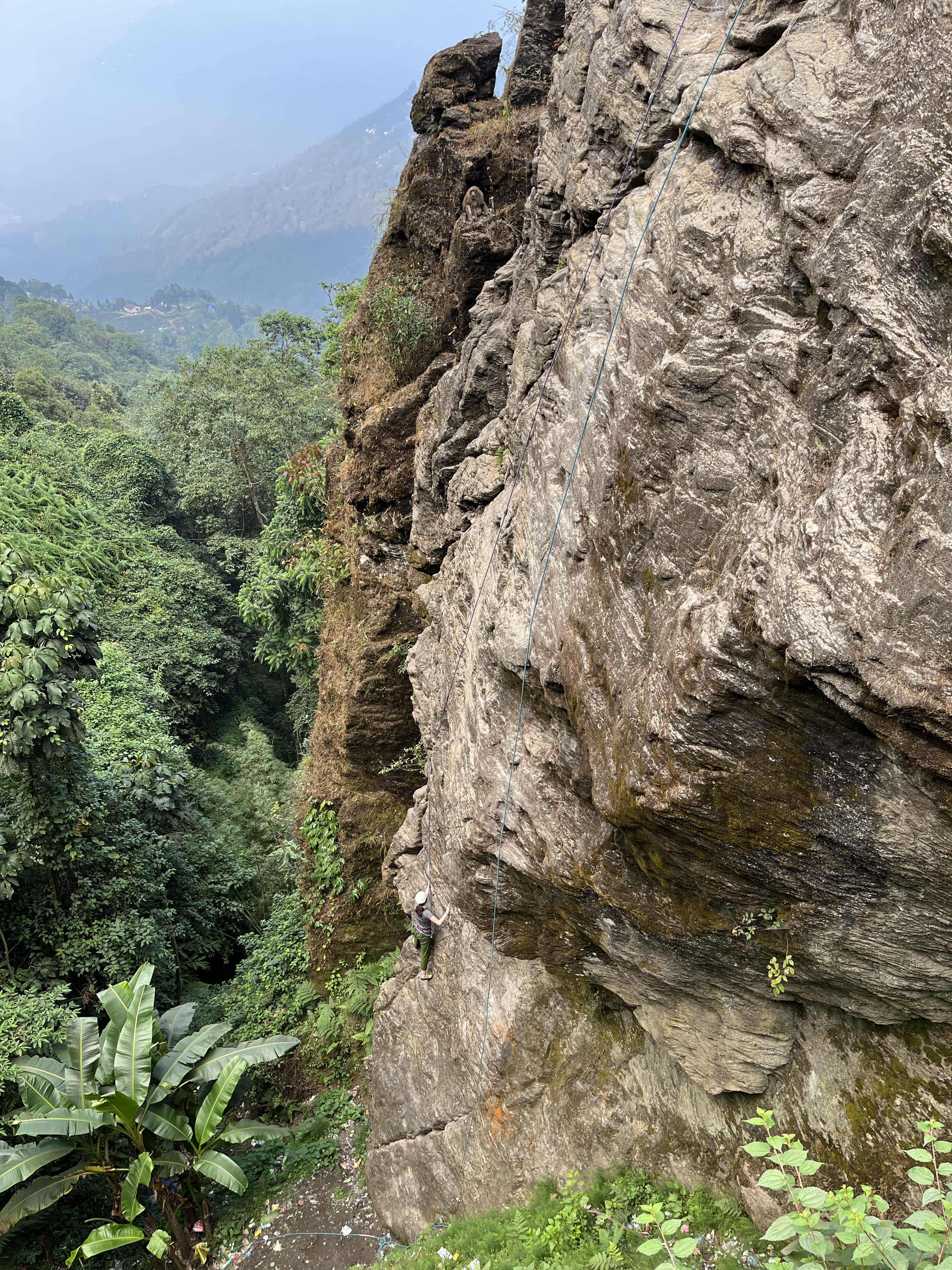
After lunch we made it to the climbing rock. Japan told us that we had to wait for some other people and invited us to try out the little rock mainly meant for children tourists. It was not a situation that you would find in the Netherlands. The guide was sitting 10 meters up the rock, an old rope going through a ring. He does not use a belay device. He just pulls the rope through the ring, while you are attached to the rope on the other side. Well. Just do not fall I guess, and otherwise it is only 10 meters? Going down you do not fully hang in your harness, but use another rope to hold yourself while you slowly walk down. After doing it once I was done. Luckily our guides arrived soon after that, with some climbing gear that seemed comparable to ours. They brought us to another rock, mostly bolted with pitons. “You do not use the same methods as Japan and his team are using right?” I asked (a bit stressed). The climbing team laughed, and told us no, they use the same techniques as we do. Jelle led one route and I decided to only toprope for the time being. After climbing two fun routs, the group local climbers (who were our guide), brought us to a higher rock. Here first Jelle repelled down and climbed back up, and afterwards I went down and up with some support (and tips) from Jelle, tourists, and our climbing (guide) group. It was a fun route and it felt so so good to finally (after 4 weeks?) climb again.
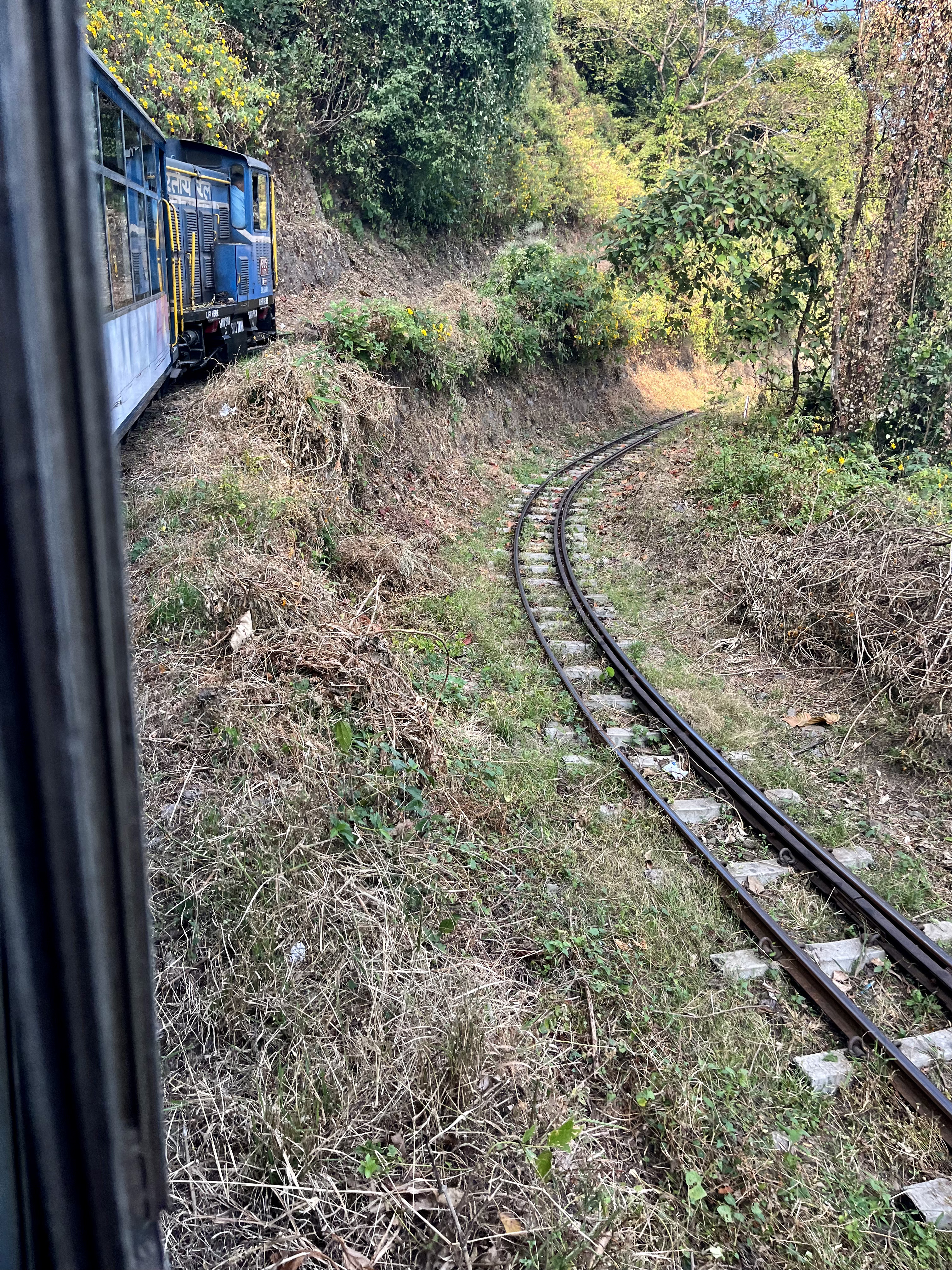
The next morning we took the toy-train to NJP station. The days before when we told people we would be taking that train, they would just reply “Oh, the slow way.”. Well yes very slow. This train does not go any faster than 15km/h, and took us through the mountains all the way to NJP in about 8 hours. On the way down at one point the train suddenly stopped. After a few minutes it started to drive again in reverse direction. Not sure what was happening we took a better look at the tracks. The train was making a Z shape down the mountain. Indeed we took another track, and every track switch was handled manually. After a few minutes we stopped again. The track was switched again, and we drove again in normal direction. This happened 5 times on the route. It was a long but fun ride.
For lunch the train just stopped at a station for 10 minutes or so, and a lovely lady from a stand at the station just walked to our window to sell us momos. You could easily just walk out of the train to use the toilet in the station (which was way better than the one in the train).
At one point when we were heading into the city, we were standing still in the middle of a field surrounded by multiple groups of men playing cards, children playing/cycling, women talking to each other while sitting on the train track, and men peeing at a wall in the middle of it (Indian men just pee wherever they want). We stood there for about 10 minutes before the train could go again (we were waiting for a track switch). With a loud honk people slowly started to move away from the tracks to make space for the train. Children and people waving at us when we started driving, “Goodbye” they said.
We arrived in NJP when it was dark. NJP is a very busy chaotic town, where apparently it is normal to call your restaurant “hotel”, which led to some confusing conversations. After passing 10 hotels that were no hotels, an Indian man convinced us to stay in his lodge, we walked with him: no space. Apparently he was not the owner but someone that tried to get some money to lead us to a lodge. We refused further help and decided to look for ourselves. Next lodge; no foreigners. Oh well. Finally we made it to a very cheap lodge. We got a very basic room with fan, leaking toilet, some beetles, and a blanket with holes. I was too tired to care for this one night. The next day we would take the train to Varanasi.
Since I promised Jelle, he will take over from here.
Sarnath/Varanasi
By Jelle
After waking up in our very cramped room, we decided to make the most of our situation. We had a few hours to kill before we had to catch our train, so we got breakfast at one of the places we passed the night before, I got a shave, and we tried to do a little meditating in our room. Sadly, Indian people have no sense of privacy, so our door was repeatedly knocked upon to interrupt our mediation. On the bright side, Indian shaves are the best thing ever! Fresh blades, all kinds of gels and perfumes, facial massages, and that for the equivalent of 1 euro if you get ripped off. Awesome.
But back to the train! Our itinerary this time was to board at 12:25, and get off at 01:30 the next morning. Middle of the night, but luckily we had already found a guesthouse (Jain Paying Guesthouse), recommended by a 10 year old edition of the Lonely Planet, whose owner had let us know he would be ready to receive us. Only hitch in the plan, tickets were very hard to come by, so we had to settle for third class tickets (3A). After some horror stories we had heard before going to India, we were not looking forward. What we found was luckily way less bad than we had feared.
When the train arrived and we boarded, we found that the 3A coaches had eight beds next two each other. Two along the wall, and six on the opposite side. These were hung three above each other, and the middle bed folded up to make two benches with one bed, or berth as it is called, above your head. Ours was the lower and middle berth of one of the six. After some fiddling with our bags (these trains are not exactly built for backpacks), we made ourselves comfortable across from the family of four that would be our opposite neighbors. Pretty soon, we were on the move.
Not long after we set off, we found that not everyone had been assigned a berth. Some people decided to just board the train even though they were still on the waiting list. (Spoiler alert, we would be abusing this same strategy before long.) These people had to sit somewhere, and apparently our berth was a popular place. Which became especially bothersome when you were trying to balance some train-served dahl on your lap, or you were trying to get some sleep. After some well-meant but perhaps harsh warnings to get the fuck (slightly exaggerated the language here) off our berths, mostly I was able to get some sleep.
Until, suddenly, we were rudely awoken by Indians with burning phone flashlights. Feeling like we had been roused by the CIA, they explained that we were about to arrive in Varanasi. We had put an alarm to wake us up on time which hadn’t rang, so we were thoroughly confused, but not wanting to miss our stop we flew out of bed anyway. After getting off the train and getting our bearings, we realized we had been kicked off the train at Varanasi Centre, instead of Junction which we had been aiming for. Thoroughly annoyed because of our premature wake-up call, we set out to find a tuk-tuk that would take us to our guesthouse. This was not too difficult, and before long arrived at our guesthouse, where our host received us with open arms and a warm bed. Undisturbed rest at long last.
The next morning we awoke under our mosquito net, and made our way downstairs to meet our host: the veritable angel, Dr. Jain Paying. It cannot be understated how nice this man is, he immediately served us a lovely breakfast, heard our sorrowful tales of our previous night, introduced us to his wife and daughter, and recommended places to see in Sarnath, the place where we had landed. We wanted to go to Varanasi, yes, but we had also heard that Varanasi was exhaustingly busy and that Sarnath was a nice, spiritual, suburb where staying would be a lot more peaceful.
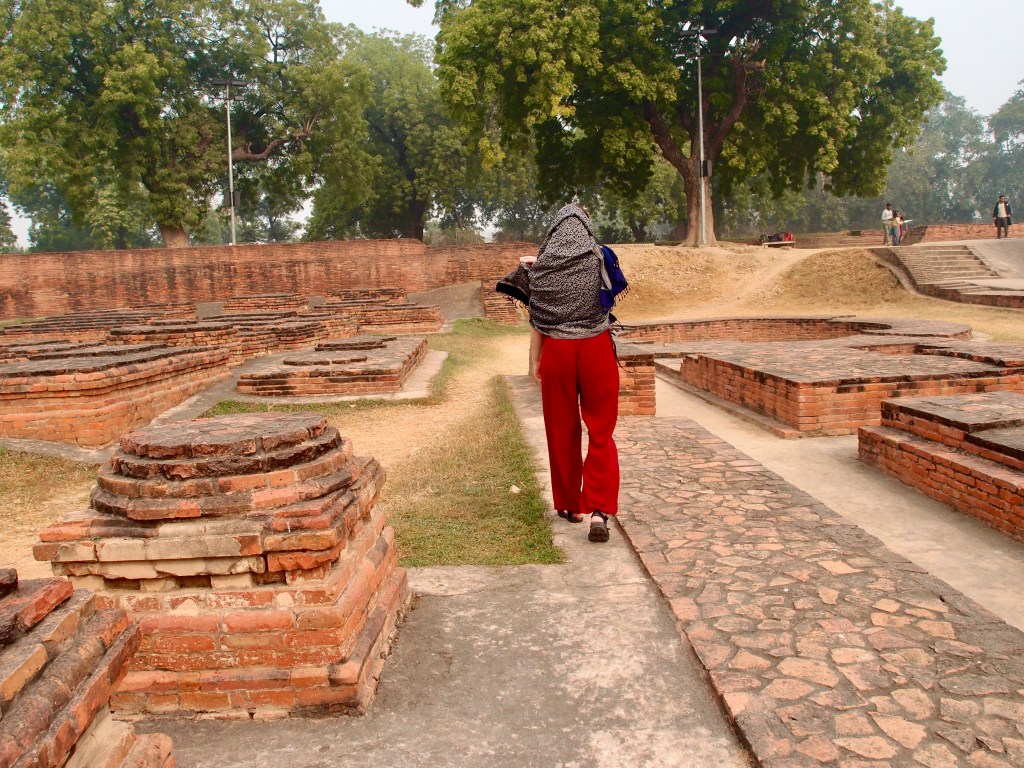
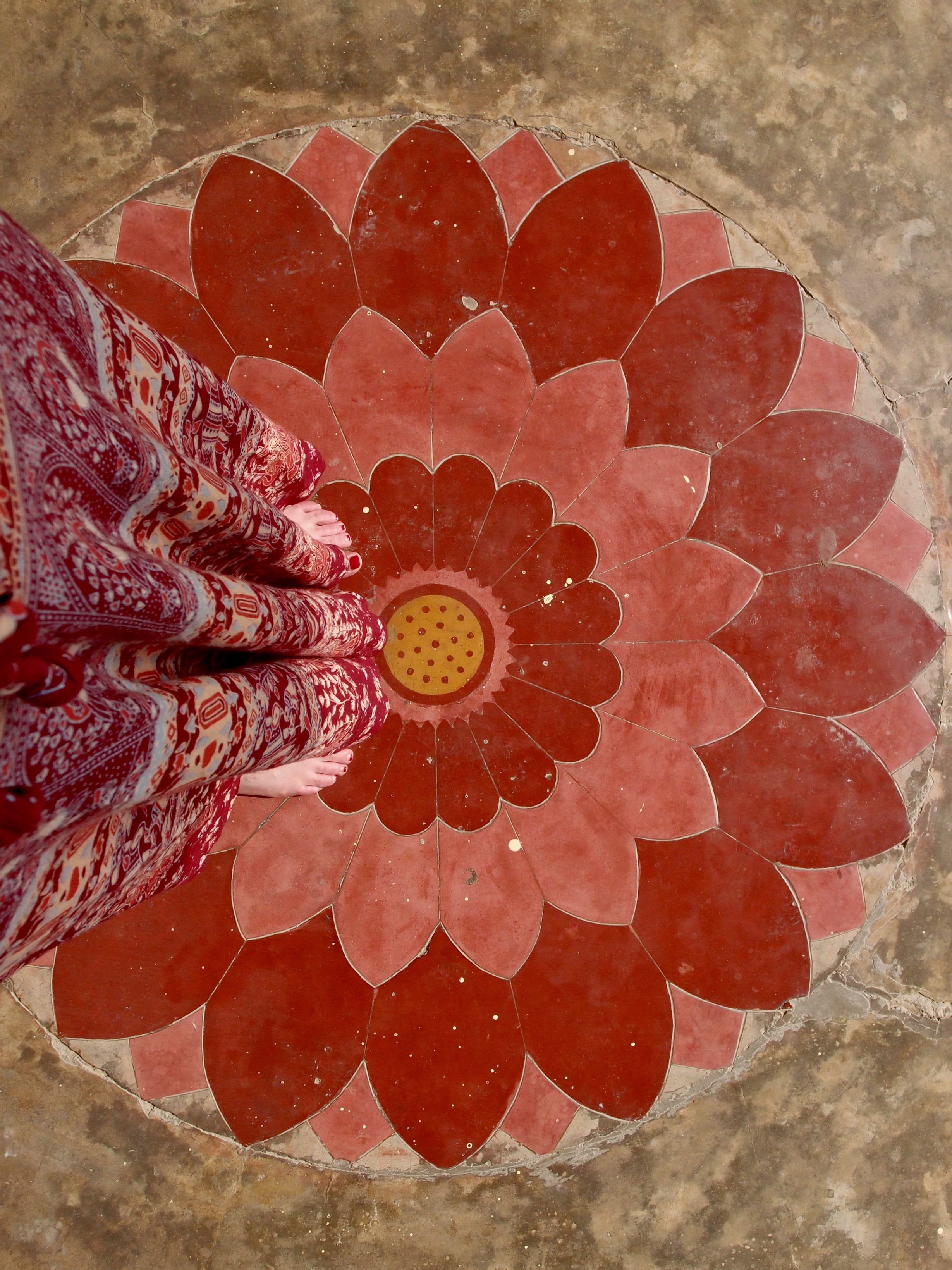
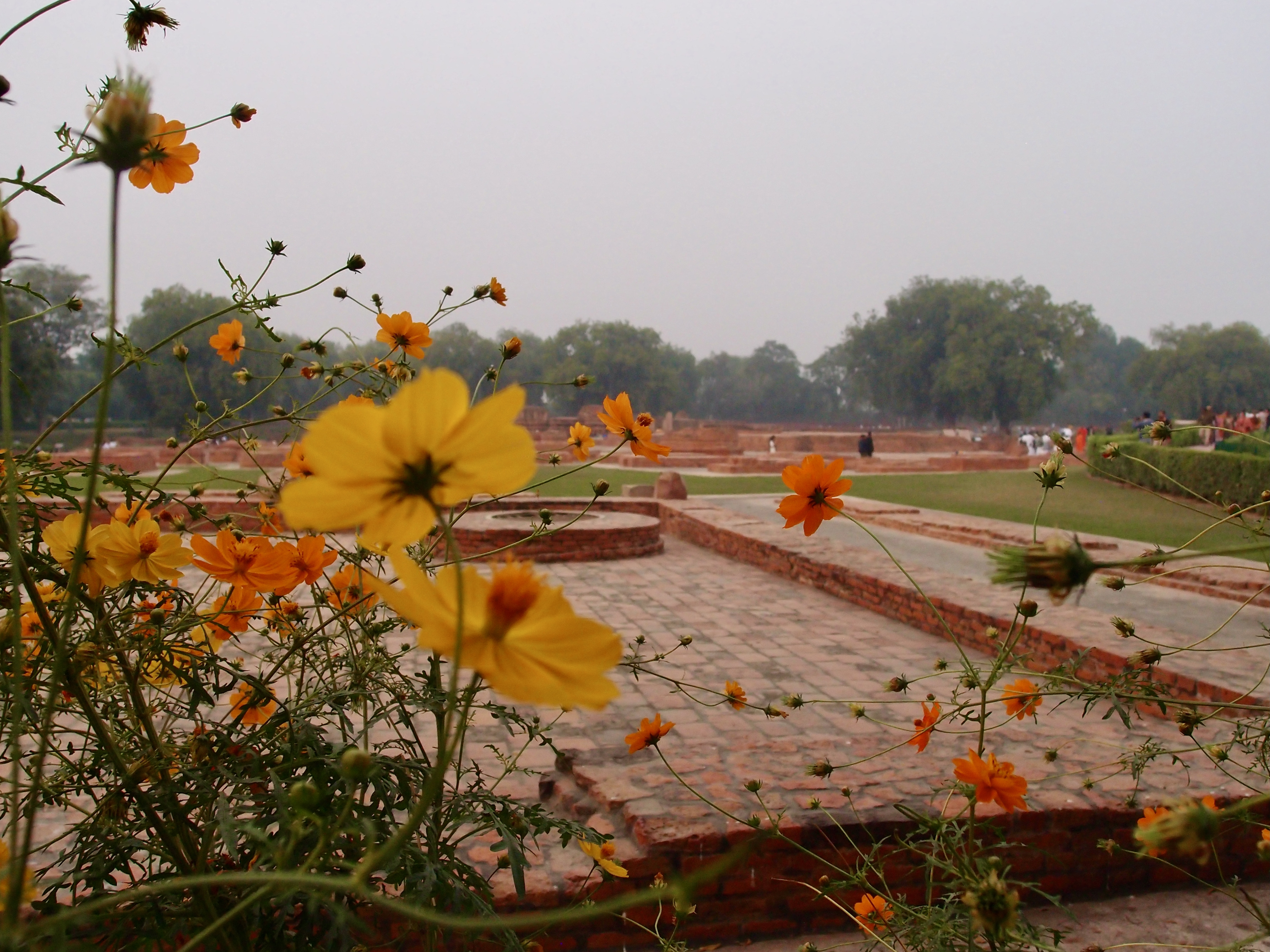
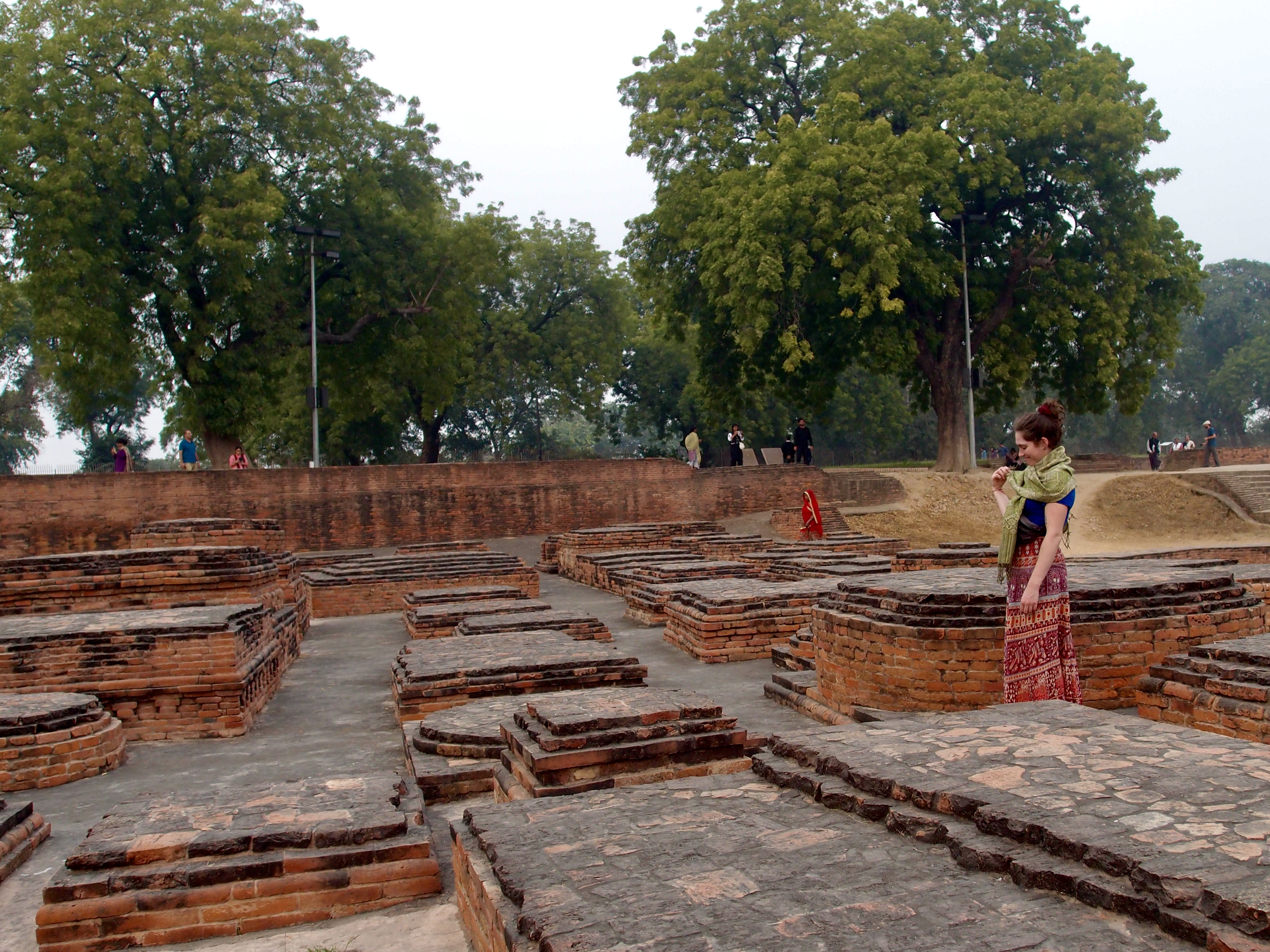
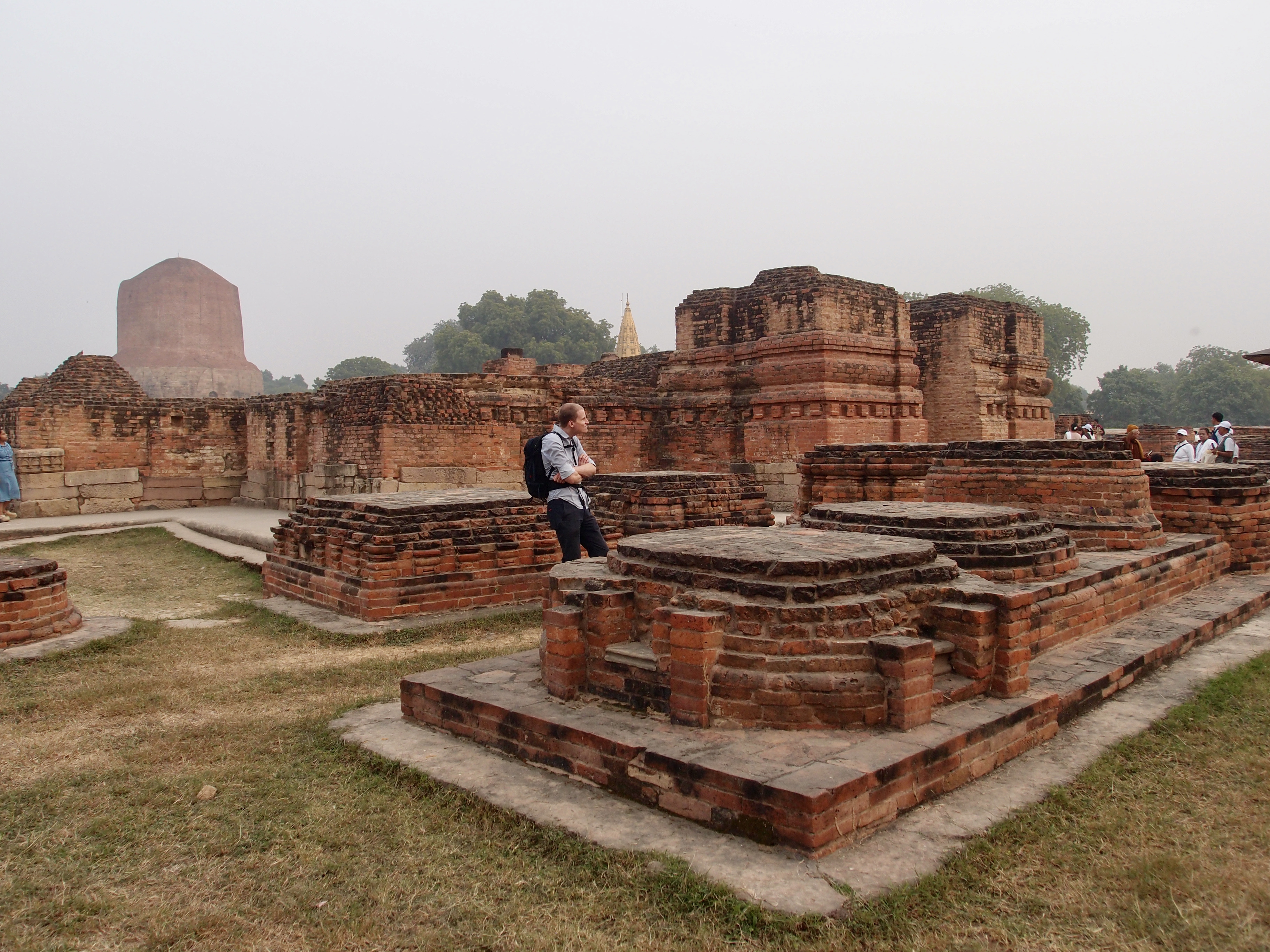
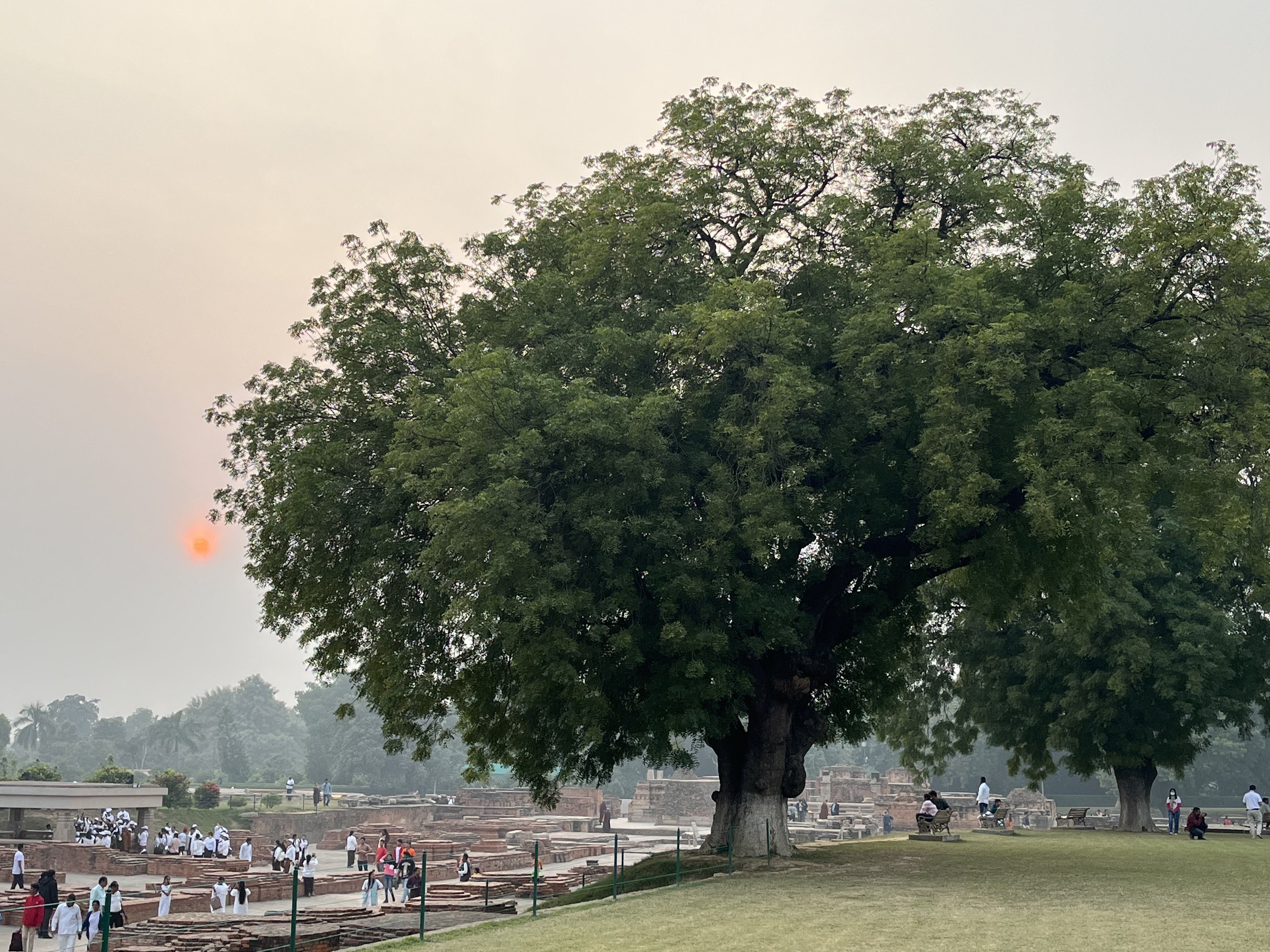
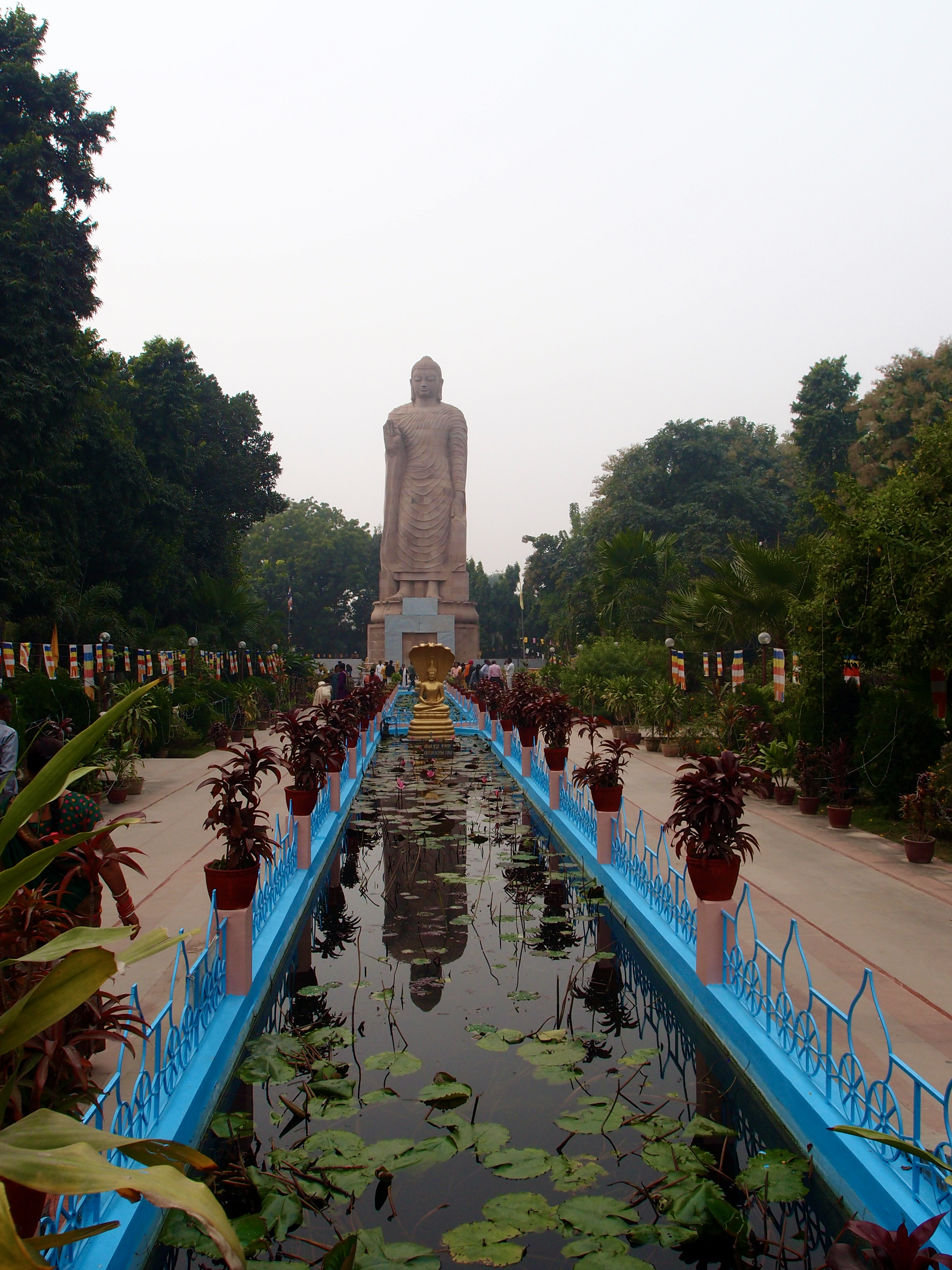
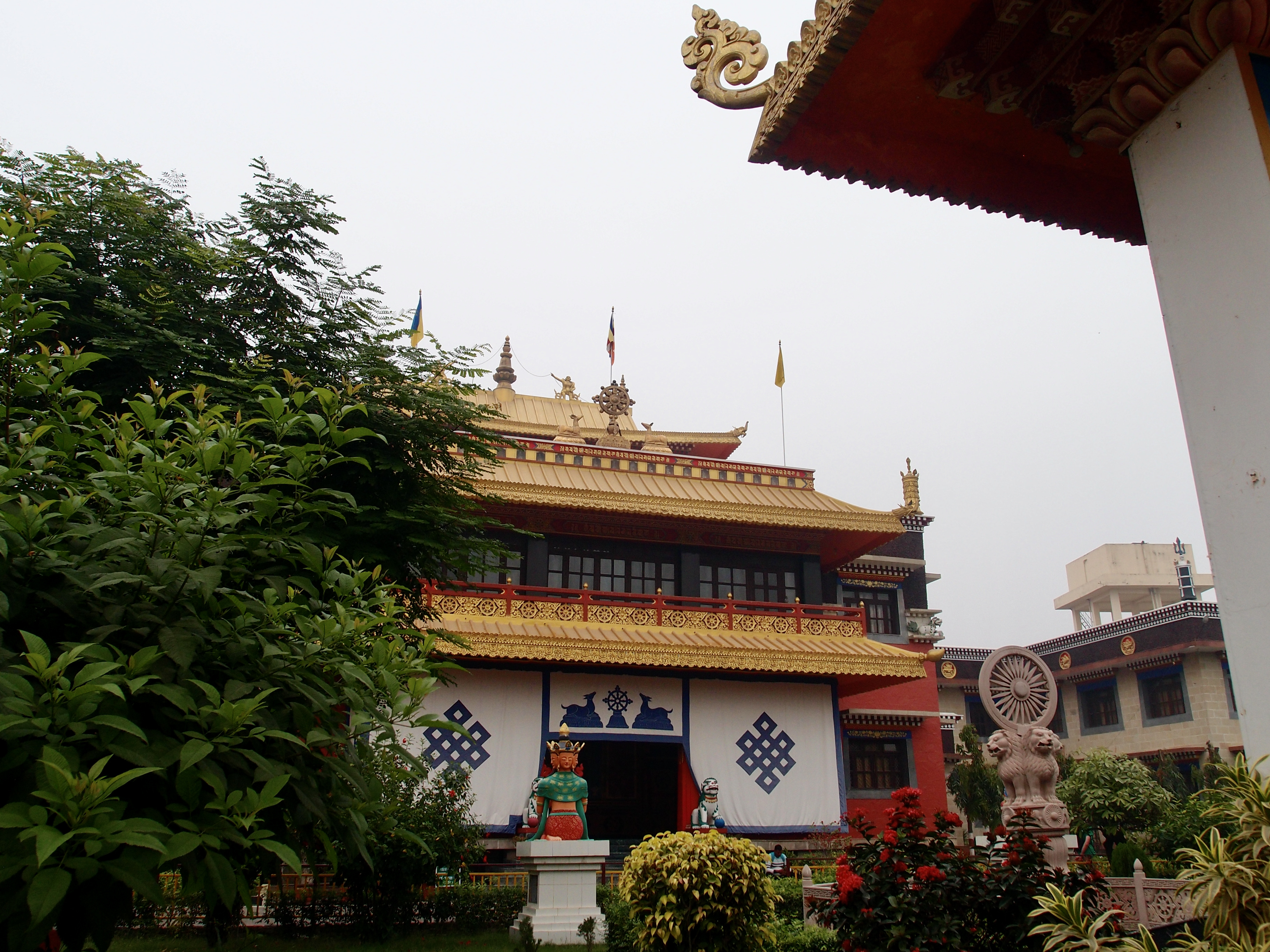
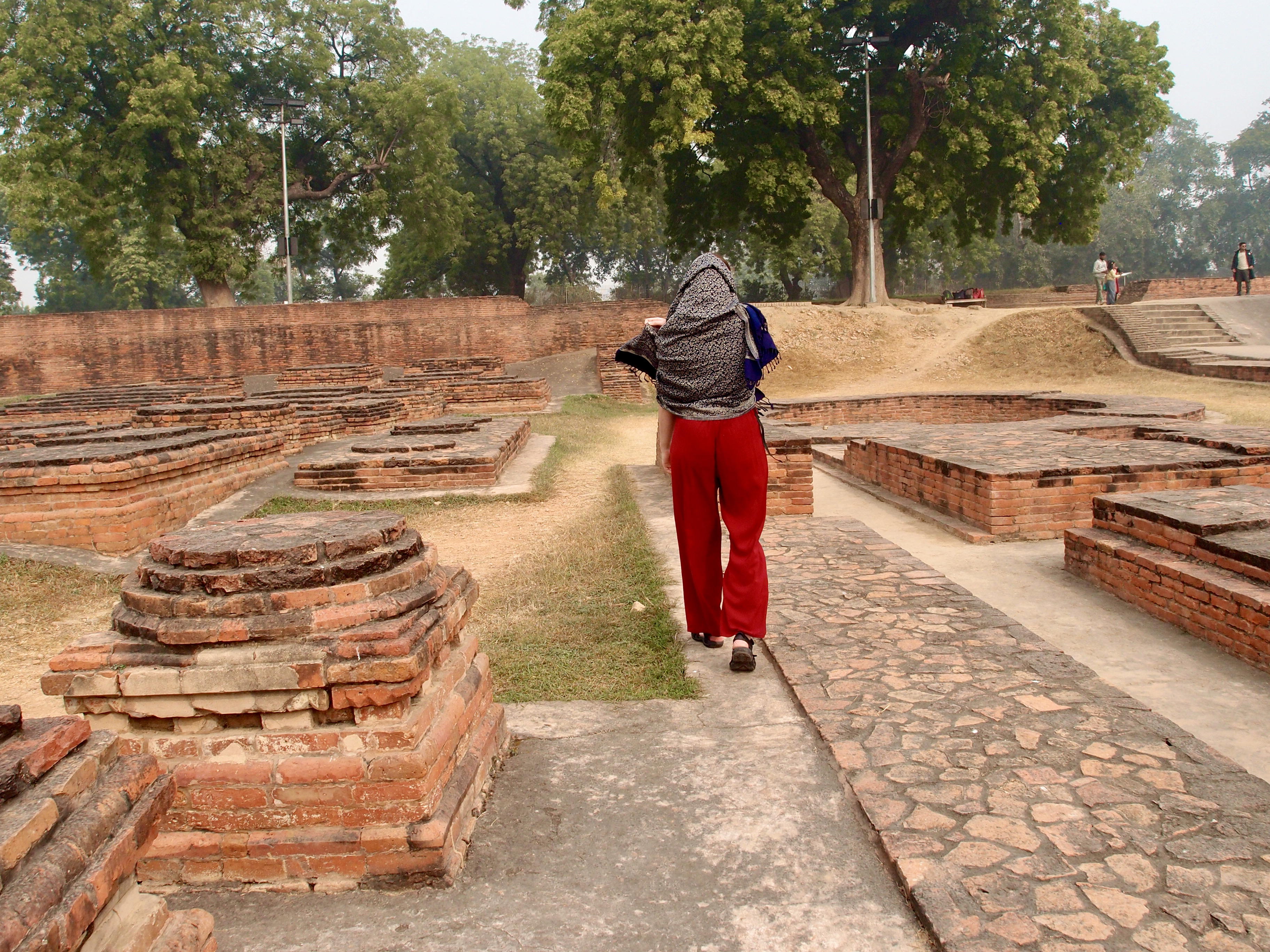
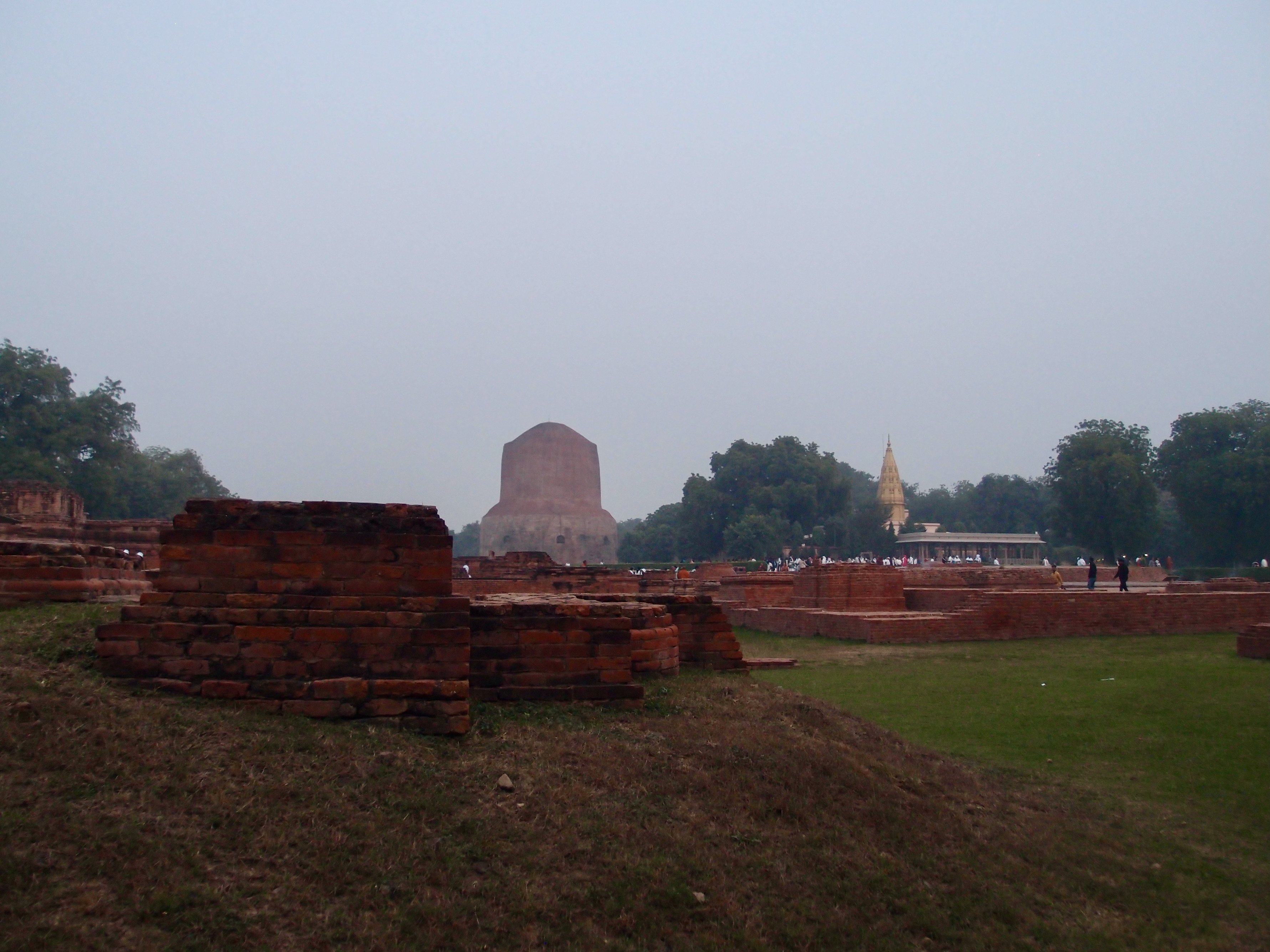
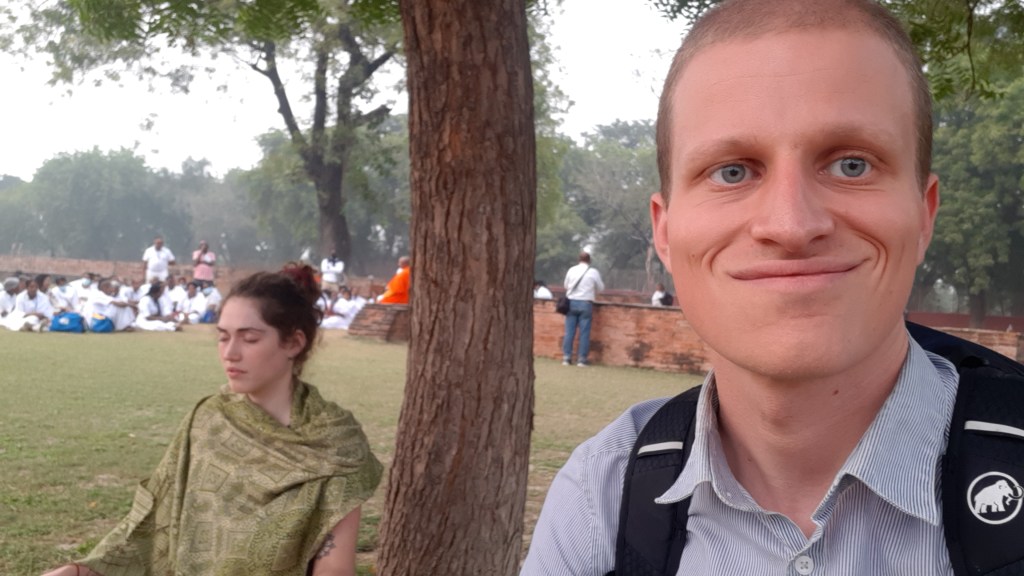
How right they were! Sarnath is home to a large number of Buddhist temples, archeologically significant sites, and the largest Stupa you have ever seen (Note by Eva: Boudhanath Stupa in Nepal is larger). Most of which is conveniently located in a gated park with loads of grass, space, and a museum. We saw our chance, and after visiting most of the temples, bought our tickets to the park. Sunshine and comparable quiet met us inside, sometimes interrupted by groups of school kids that really wanted to take our picture. We took one with what felt like 300 kids at the same time, and ran like hell before they wanted more. After having dinner with Saint Paying, we made plans to dive into the belly of the beast, Varanasi.
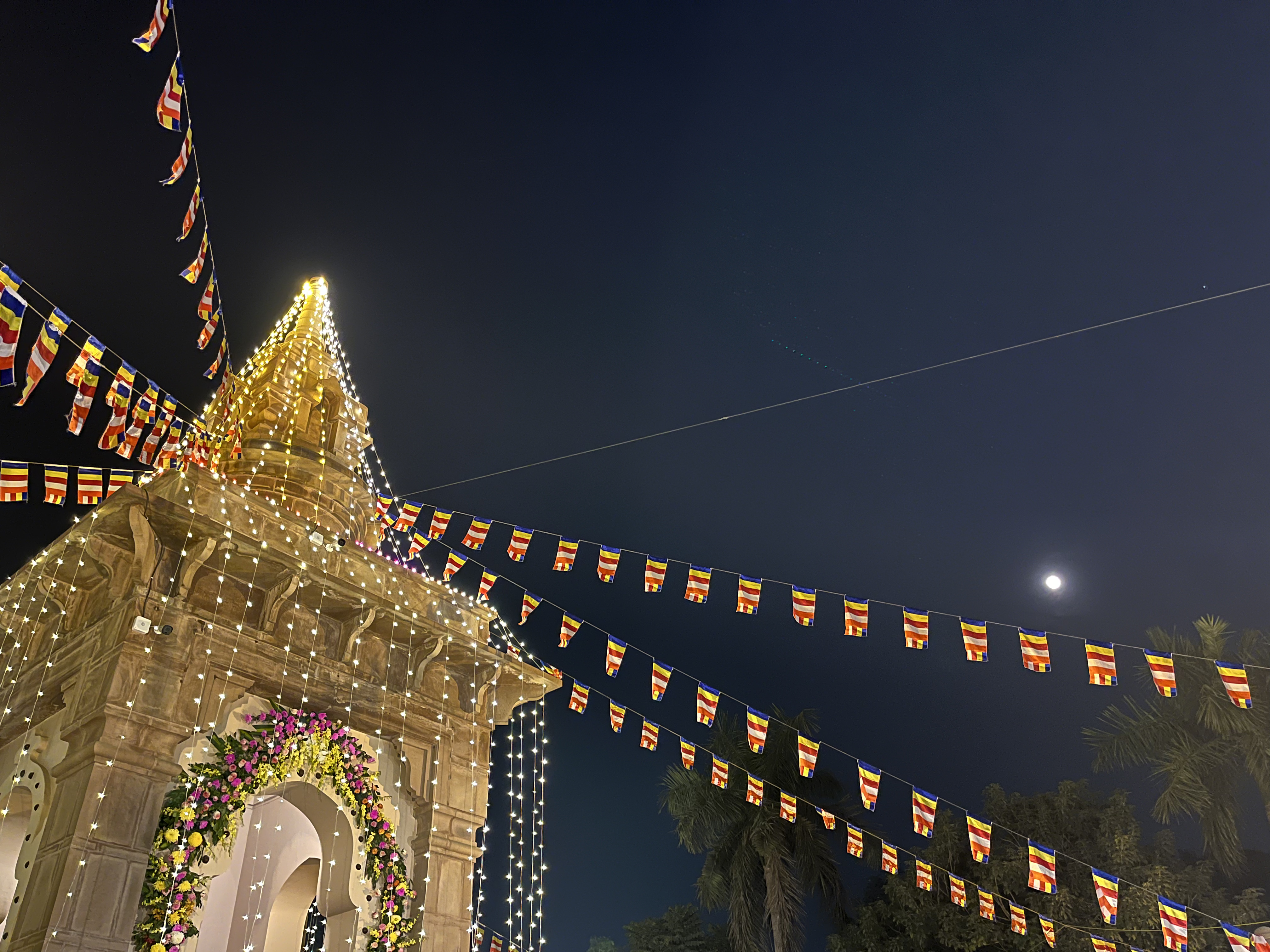
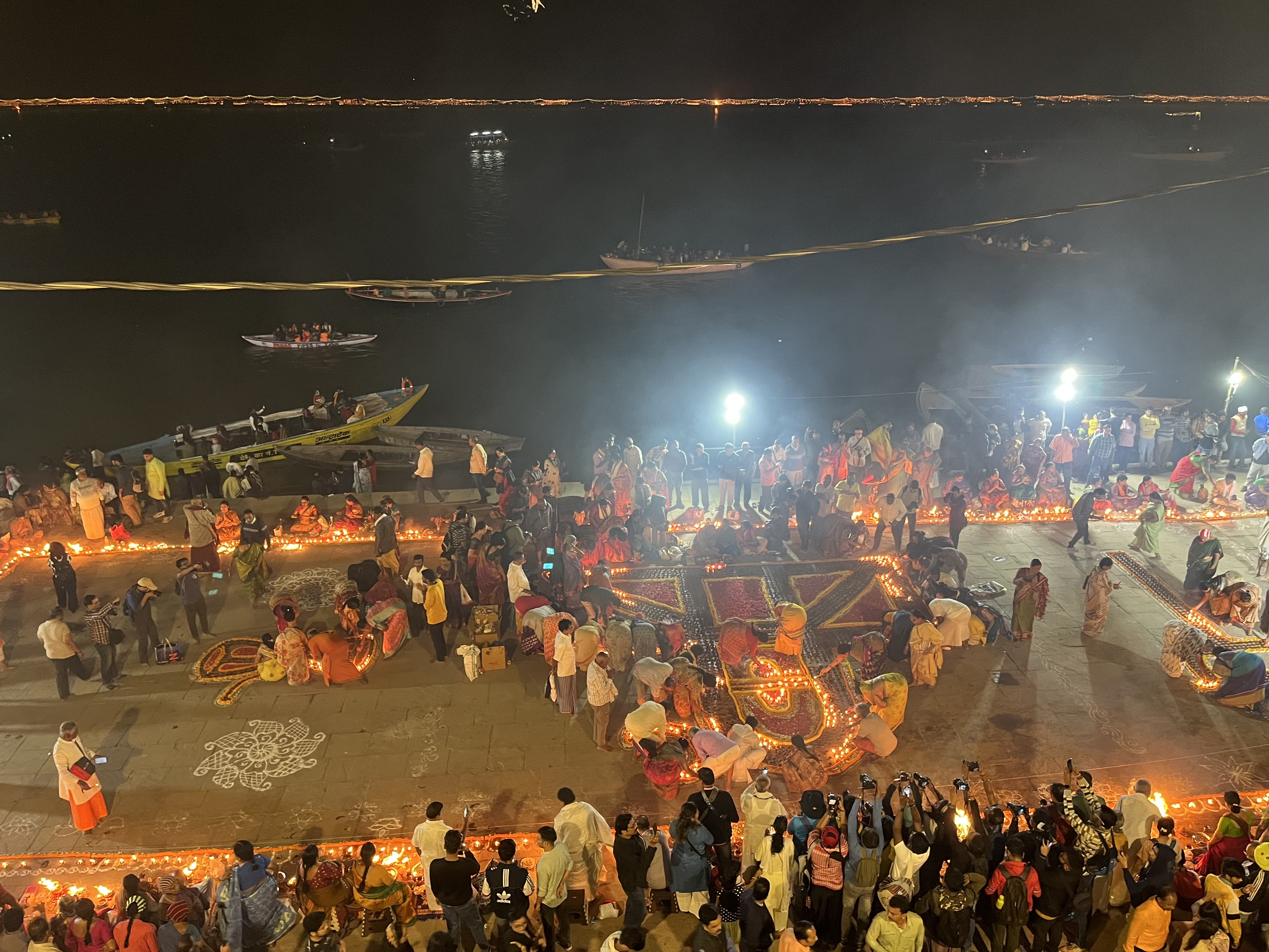
We were warned beforehand that the city would be extra busy today, because of some festival / holiday / lightshow going on. We thought little of it, even though our host’s daughter assured us she wouldn’t be going because of the crowds. Heed my warning: if an Indian warns you about a place being too busy, heed their warning.
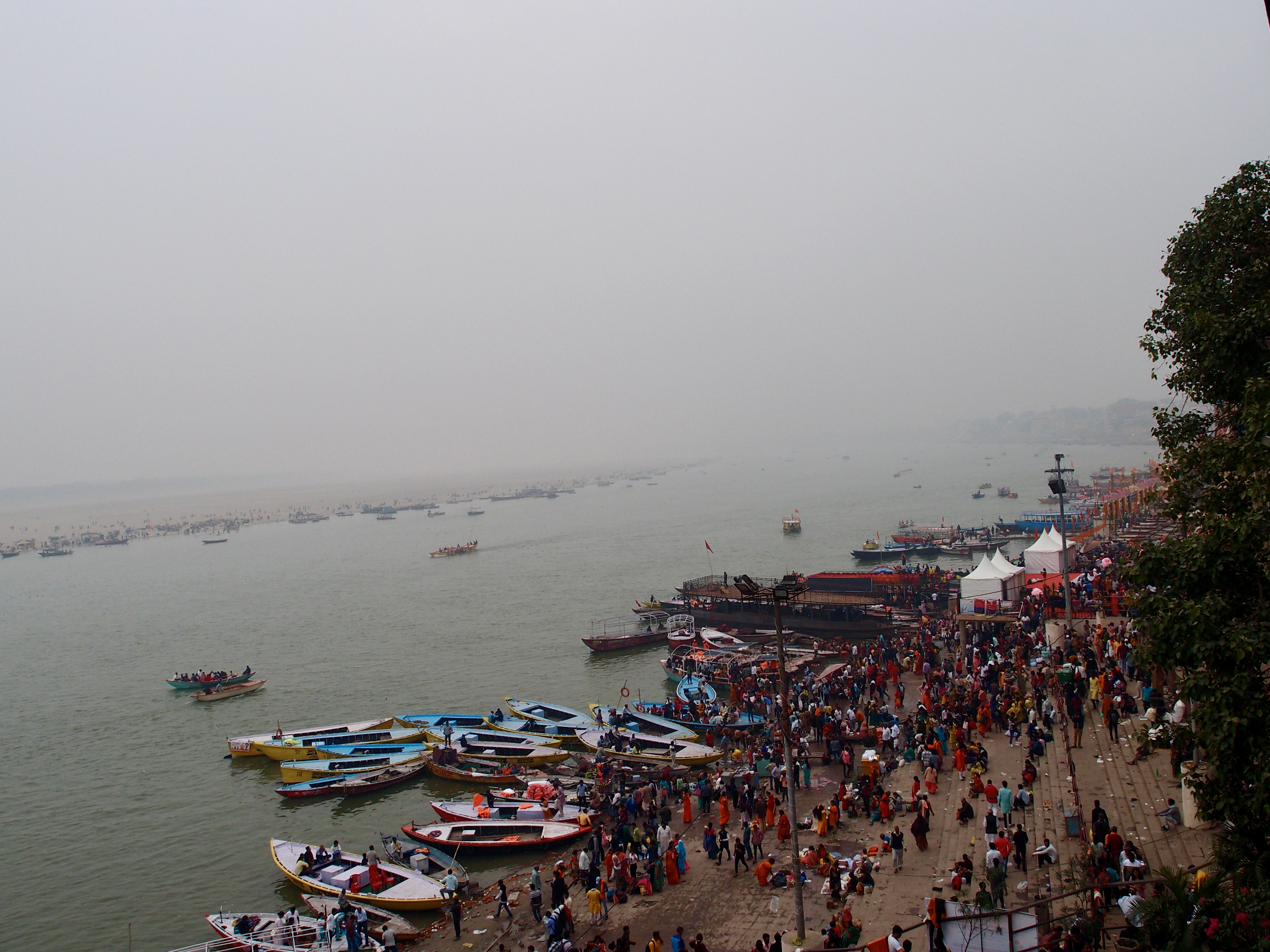
After taking a tuk-tuk into the city and getting off halfway because we got utterly stuck in traffic, we delved into the tangle of back alleys that is Varanasi. Passing by shops, restaurants, hordes of people carrying offers to the Gods, and the occasional cow, we made our way to The Holy River of India, the Ganges.
This river is used as the city’s shower, bathroom, boating location, burial ground, and probably many more functions. The city has embraced all these uses by building dozens of Ghats, large stone stairways that dive from the city to the water’s edge. The Ghats are the main gathering points for all the aforementioned uses, and we started by making our way to the one that has cremating the dead as its main function: Manikarnika Ghat. This was something to witness, in the span of 15 minutes of watching we saw half a dozen stretchers being carried across the Ghat into the Ganges. The stretchers carry a corpse swathed in cloth, laden with flowers and blessings, and are placed in the Ganges to be splashed with the holy waters. They are then carried back to the stairs, left there to dry in the sun, before they are carried to one of the many burning places. The air was thick with smoke, and I tried not to think about the smoke’s contents.
After witnessing this remarkable sight, we dove back into the city looking for some activities. We took a rather unorthodox yoga lesson, found me a pair of hemp pants (finally!), and set out to find a music store. I’d had the idea to buy myself a portable music instrument for a while, and my interest had been peaked by seeing some Buddhist Gods playing a flute. Following a sign we stumbled upon, we wound up in a store that was nowhere near the one we originally intended. But what a discovery this was! It is called Prem Music Emporium (D. 36/163, Augustkunda, Dasawamedh Road, Varanasi-221001). A tiny room with the ugliest pink carpet you have ever seen, no chairs or tables, but dozens of guitars and flutes along the wall. Overcoming my fear of commitment I purchased a bamboo flute, and we went back into the city.
At this point, most of the festivities and various candle lighting ceremonies had ended, and most of the masses had decided to return home. This had the effect of all the back alleys being overcrowded, and we hid in a restaurant until the worst flood was over. Then we jostled our way out to one of the few open streets, jumped in a cab, and were dropped at our guesthouse. Utterly exhausted, we immediately turned in for the night.
Our last day in Sarnath was fairly uneventful, we went back to the museum park, visited one last monastery, and bought some postcards. Afterwards, we prepared for our train journey that night. The train that would take us to New Delhi was scheduled to leave at 4:50. Our host, being the saint that he is, arranged a tuk-tuk to take us there and even woke up at 3 in the morning to see us off.
This time we had managed to book tickets in the first class, but realized way too late that my ticket had ended up on the waiting list. Nothing to be done, our host assured us there would be no problem, and I came along as a stowaway. The train conductor seemed to agree, and I was allowed to reside in the spacious cabin with sliding door. A happy day!
That afternoon, we would be arriving in Delhi and we would start the search for a bus that can take us to Dharamshala. But that Is a story for another time.
PS Fijne Sinterklaas avond!!


 Door Eva Catherina
Geef een reactie op Louise Schmitz Reactie annuleren